Not the End of the Line
Sea and Sky Pictures
More than just a Drama
More than just a Comedy
More than just a Documentary
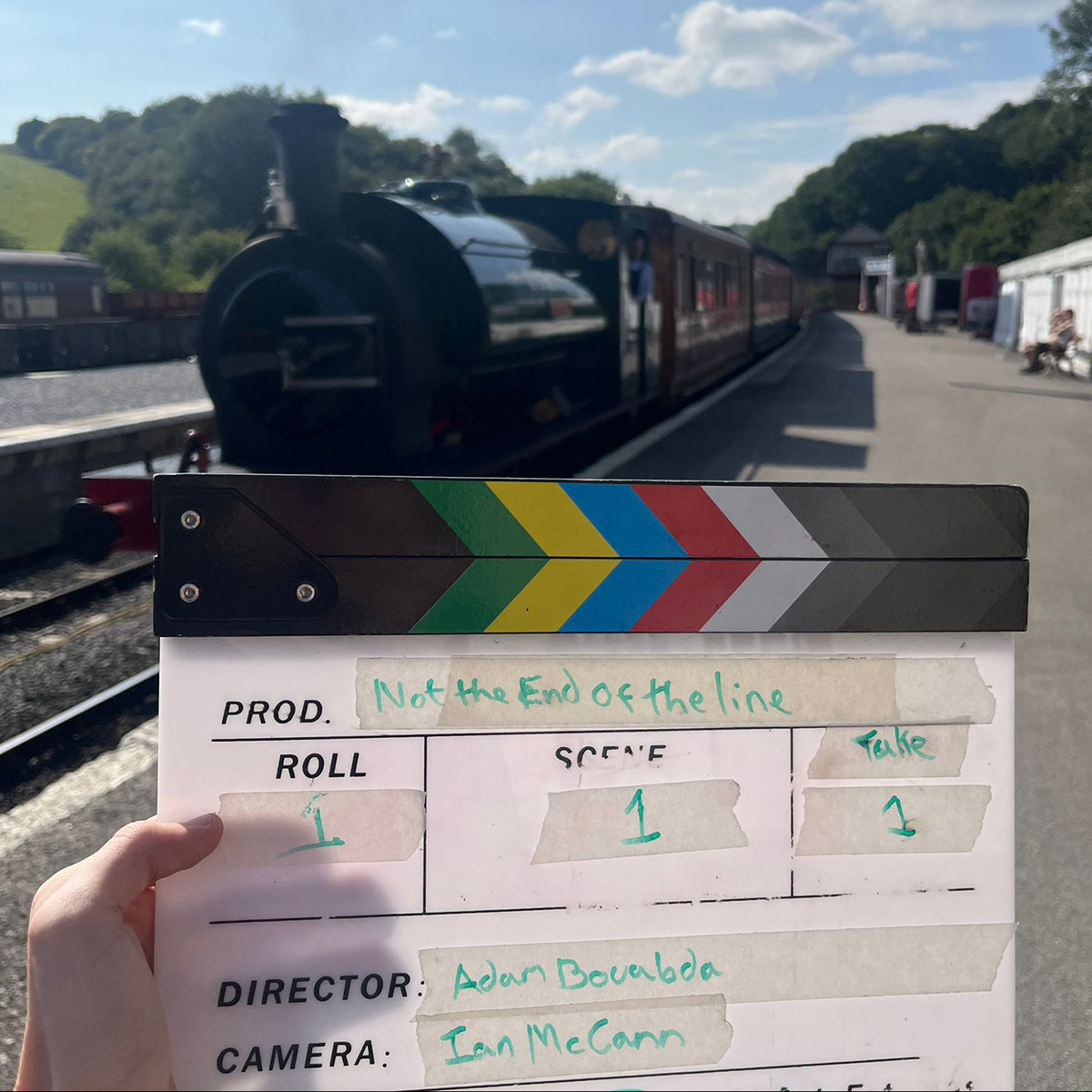
Screenplay: Keith Gregory
Producer & Director: Adam Bouabda of Sea and Sky Pictures
Cinematographer / Director of Photography & Drone Op: Ian McCann
First Impressions - What the Heck:
The script was strange, to say the least. I had to read it several times before I started to get my head around it. Initially, I was not impressed, but after studying it and talking to the Producer/Director, Adam Bouabda, of Sea and Sky Pictures, I was far more enthusiastic.
Not the End of the Line is more than a period drama, more than a documentary, and more than a comedy. It is all of the above, and it’s a passion project celebrating an event that set the world on a never-ending journey that would change the lives of pretty much everyone, pretty much everywhere, pretty much forever.
The film is just one element in a much larger multimedia production.
History - The World's Railway, Started Here:
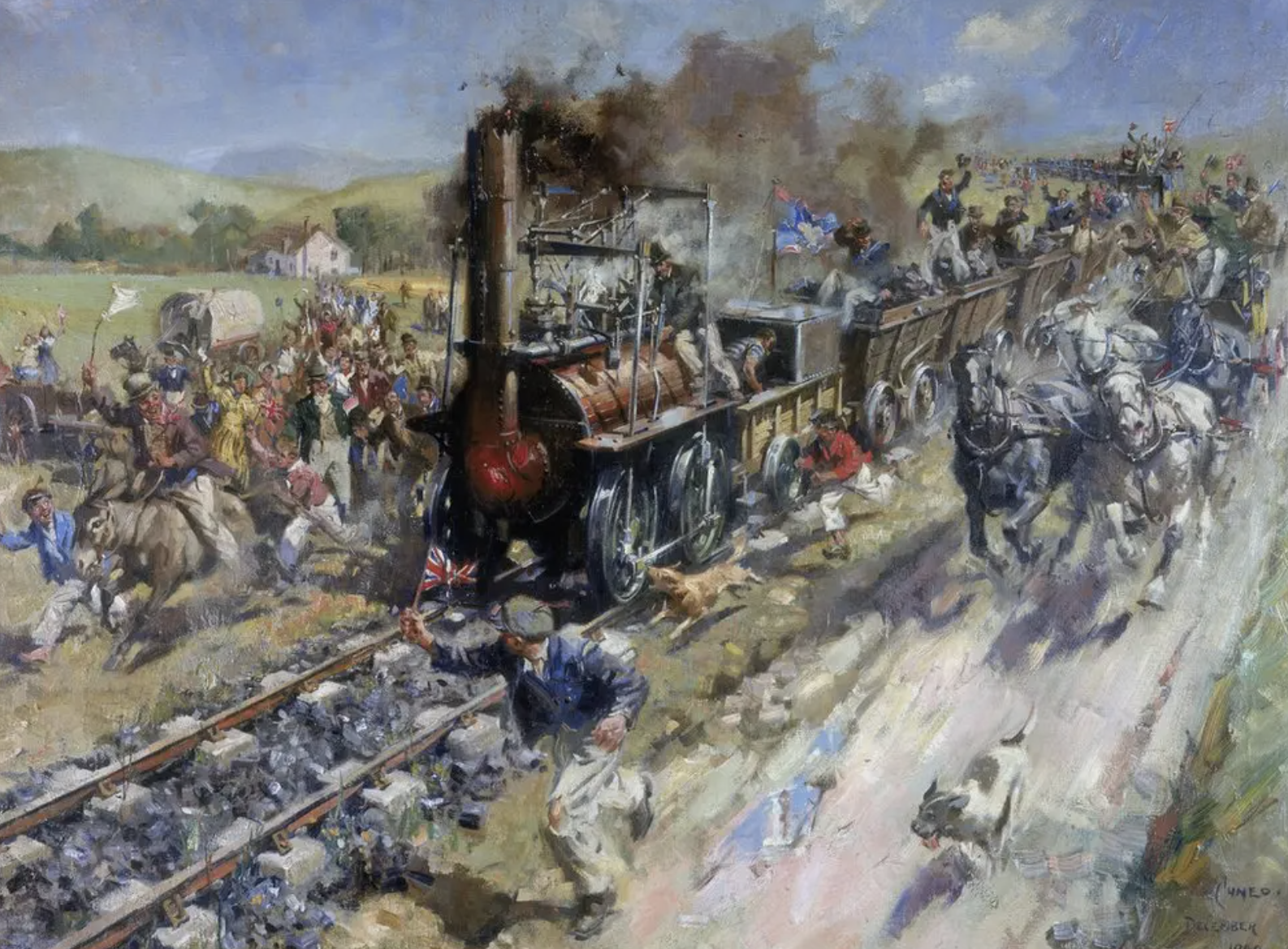
200 years ago, 27 Sept 1825, the Stockton and Darlington Railway, the world’s first steam railway, opened for business, and this event powered a revolution in the worldwide public transport industry, which rapidly switched from horses to horsepower, and quickly, massively improved the lives of much of humankind.
However, the forces lined up against the advent of railways and steam locomotives were formidable. The landed gentry, politicians, the public, and even mythical pixies were all reported to be resisting the steam locomotive and the railway. Yes, two hundred years ago, many people believed in fairies, pixies, and other fanciful creatures.
After a long struggle, the railway was granted the required Act of Parliament, but the steam locomotive was not permitted. A local Quaker, Edward Pease, fought and won that battle, and he raised the required capital, so Locomotion 1 did propel the first trains on the Stockton and Darlington Railway. And the world quickly followed in its tracks.
Our Film:
Not the End of the Line references the fact that the story started by Edward Pease, his engineer, George Stephenson, and the S&D Railway was more than just an engineering project, but the birth of a new technology-based era that would advance and benefit mankind.
Screenplay:
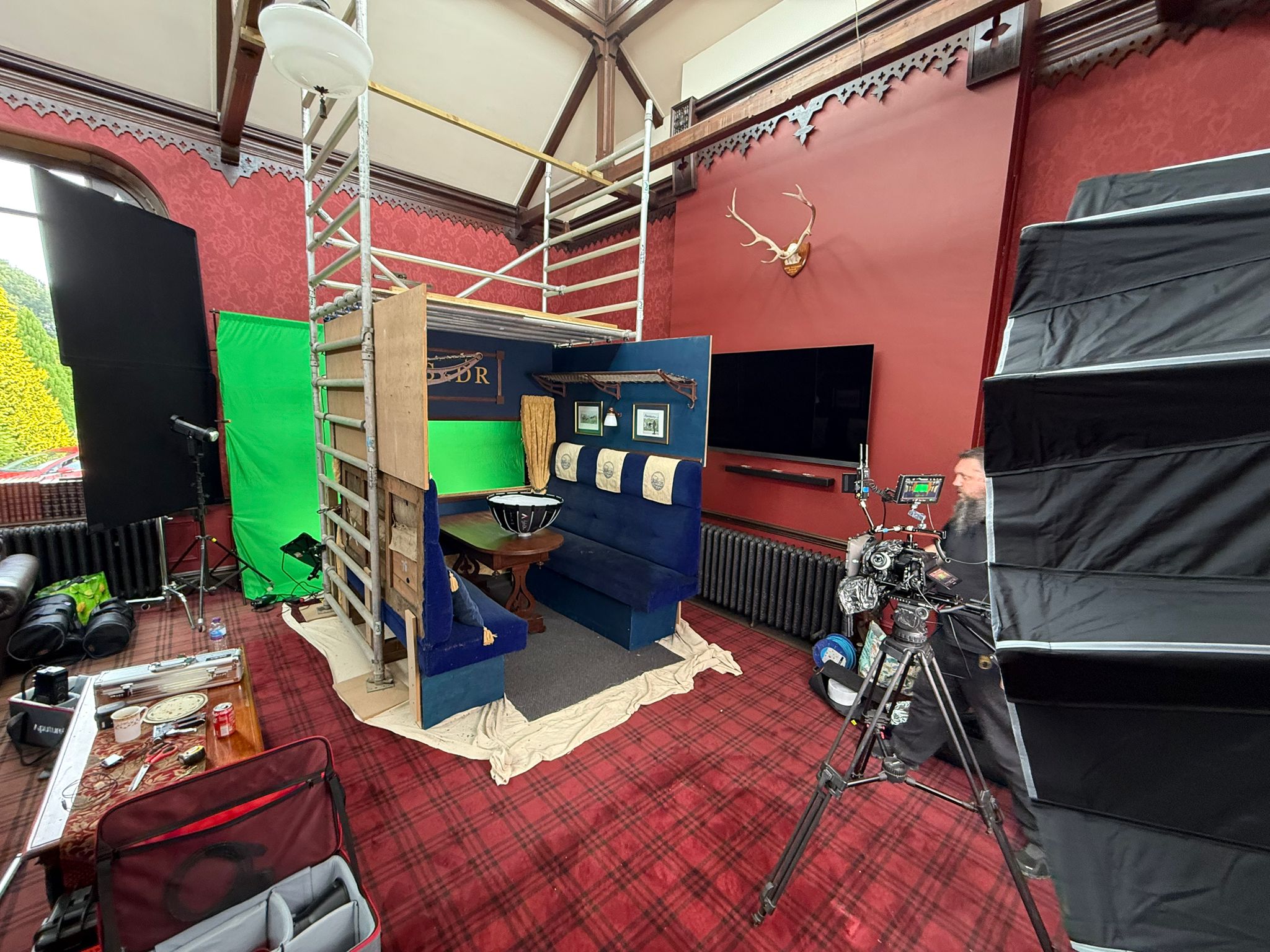
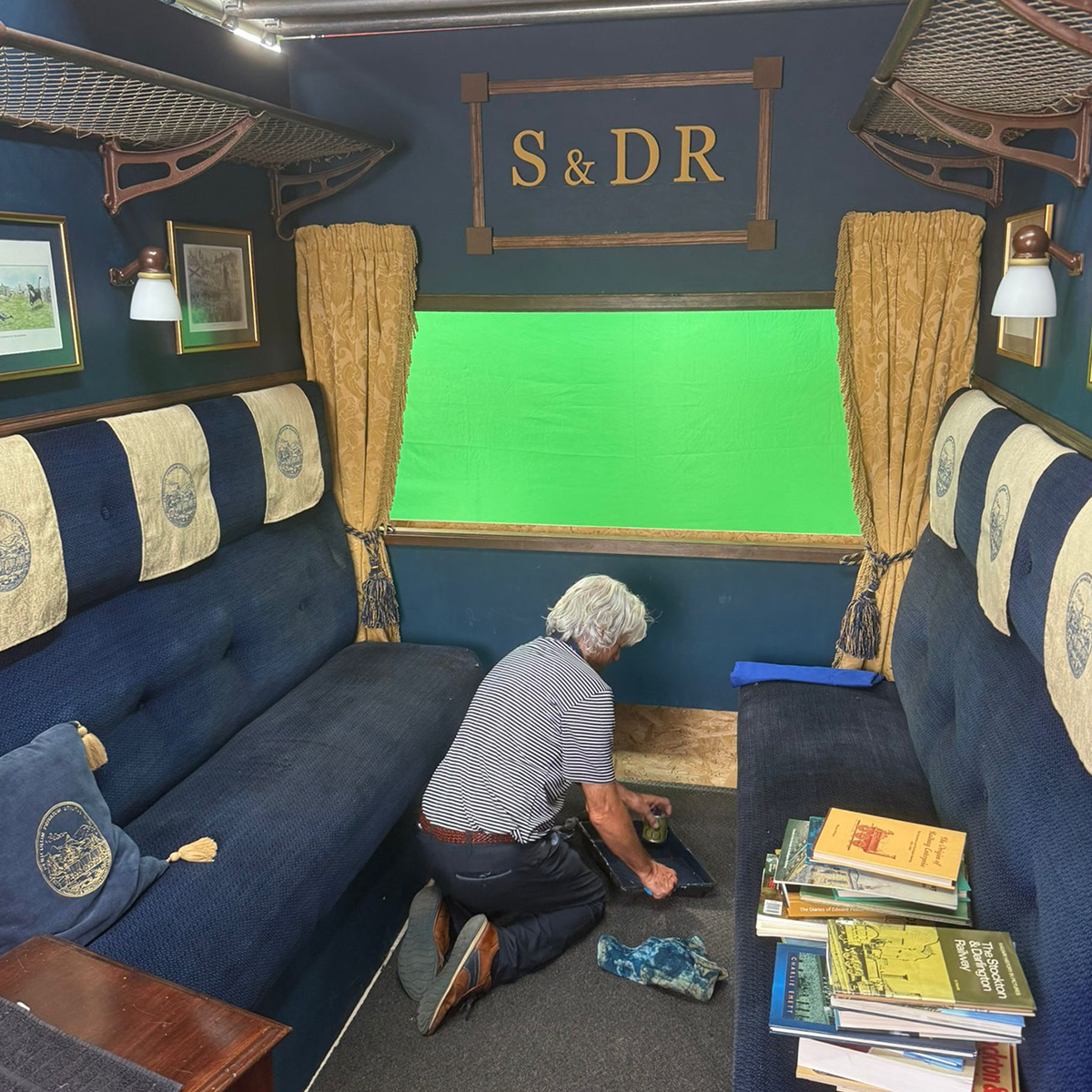
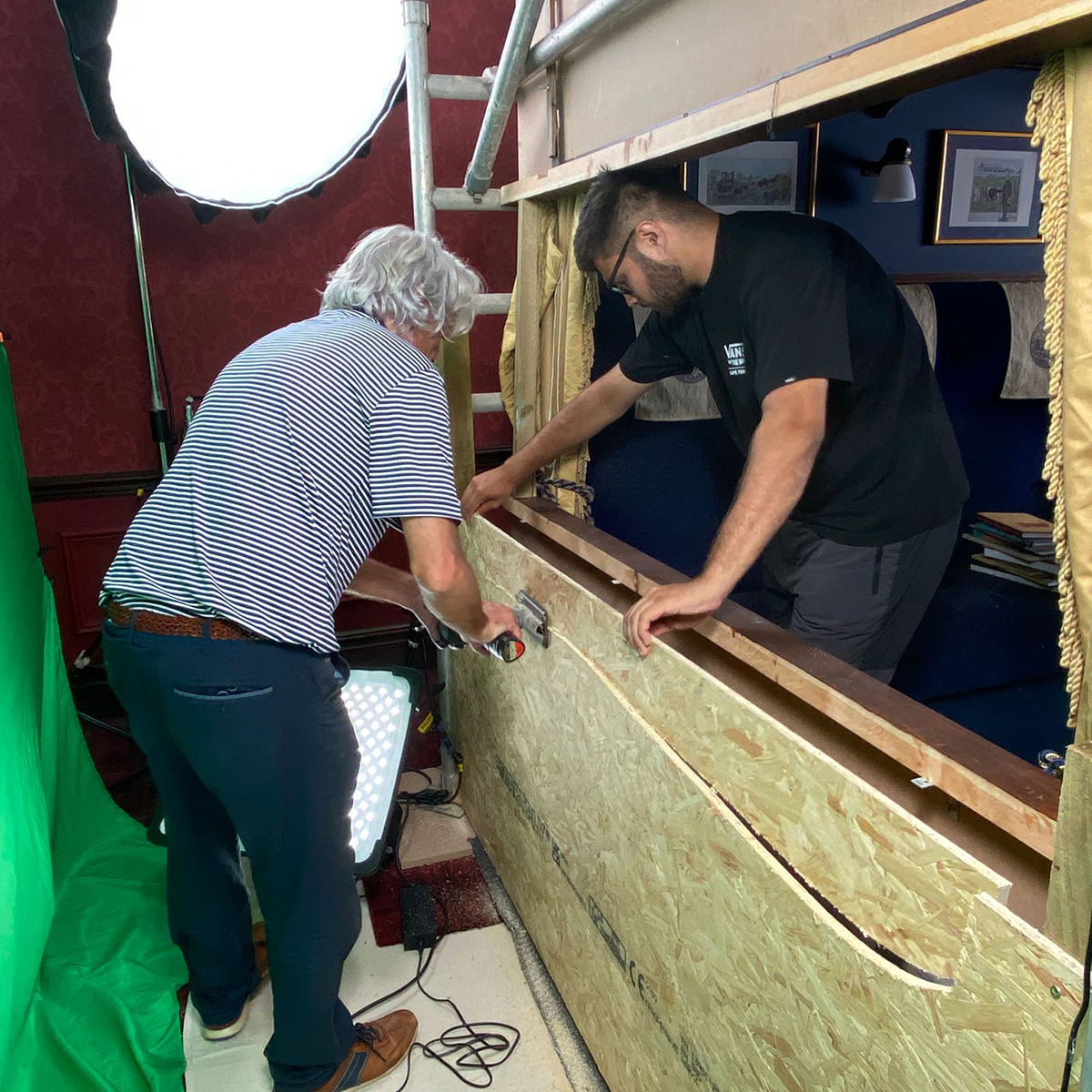
Keith Gregory, a local businessman with a passion for this important story, wrote this creative, funny, fascinating, informative, and sophisticated screenplay. A man of many talents, Keith also designed and constructed a film set and worked as our Standby Carpenter and Painter.
Sea and Sky Pictures:
Our production company was determined that all cast and crew should be locals, in honour of all the people who were responsible for building and operating the railway.
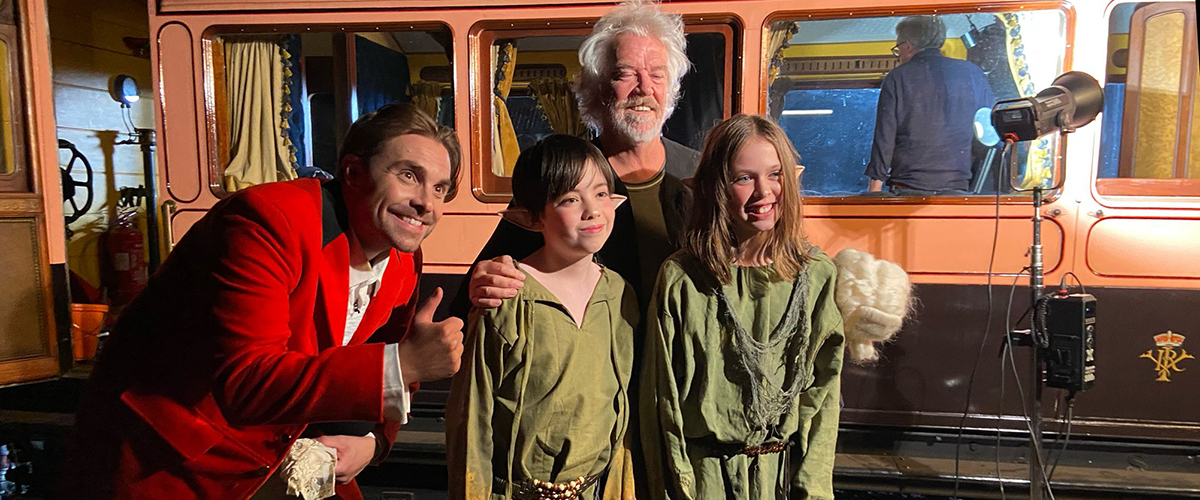
The Cast:
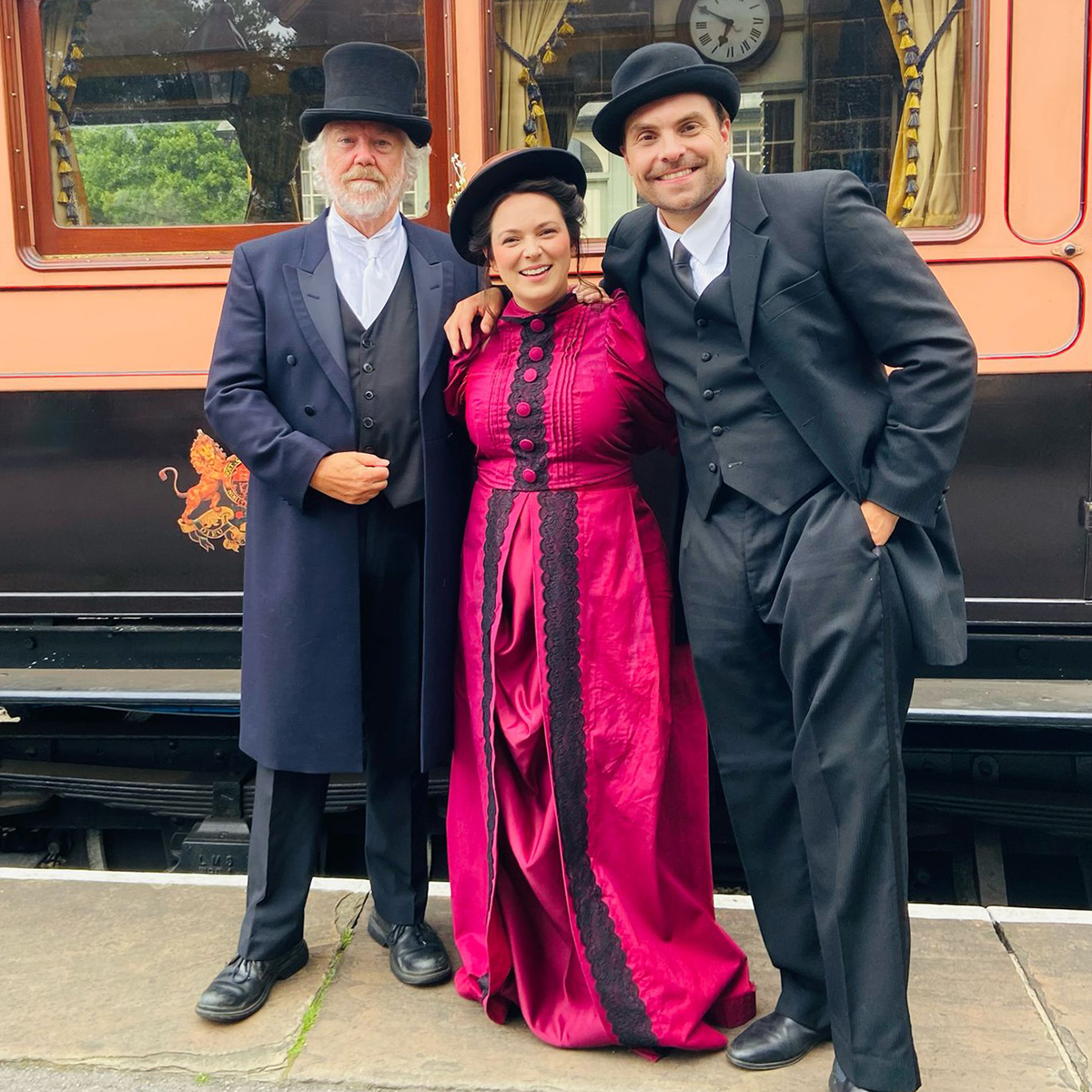
Included well-known local actors:
Bill Fellows
Jacob Anderton
Rachael Teate
Greig Johnson
as well as child actors BO, Eve, and Charlie, who played the pixies.
Camera Crew:
The 4 strong team of multi-skilled and enthusiastic team-players were all local people, too.
Of course, I was the Cinematographer / Director of Photography (DOP), ably and enthusiastically supported by:
Gaffer - Stewart Hunter
1st AC - Jack Fowler
Sound Recordist & Boom Op - Rory Norton
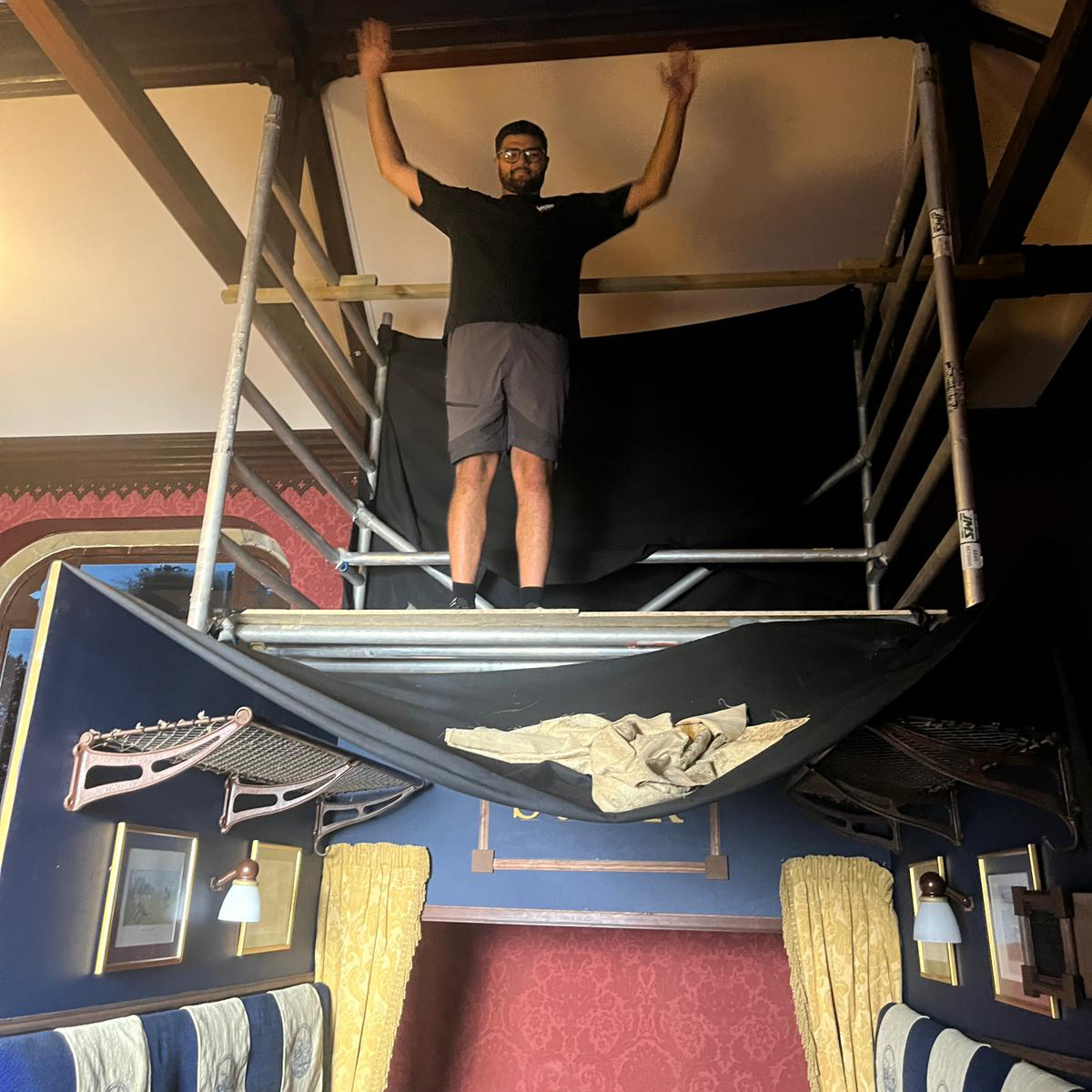
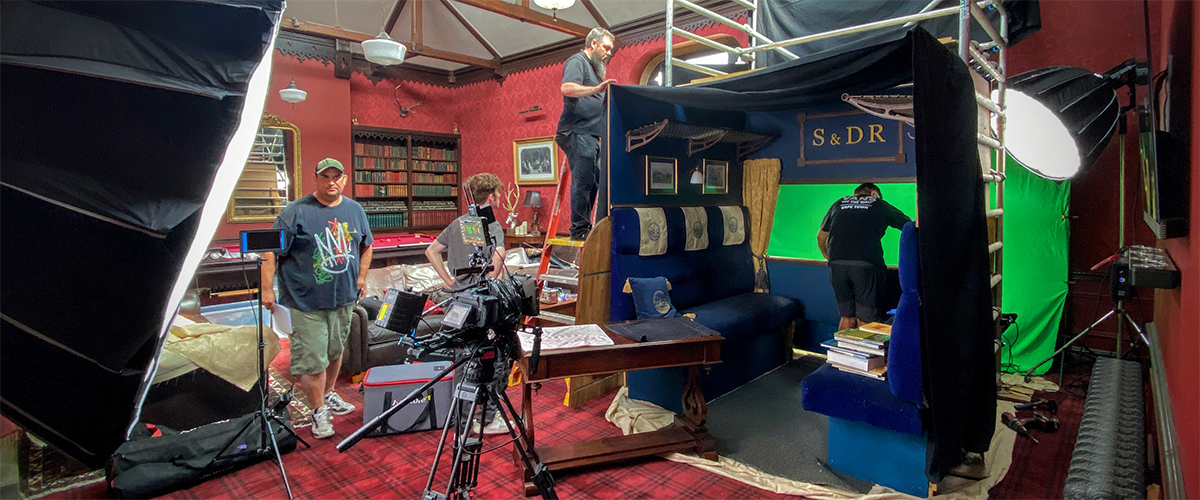
All were actively involved in much more work than their titles would indicate. Above is Rory helping with standby carpentry and rigging molton to control the ambient light falling on the greenscreen. Stuart and Jack rigged more molton to control the ambient light in the set. And every day, they were all amazingly versatile.
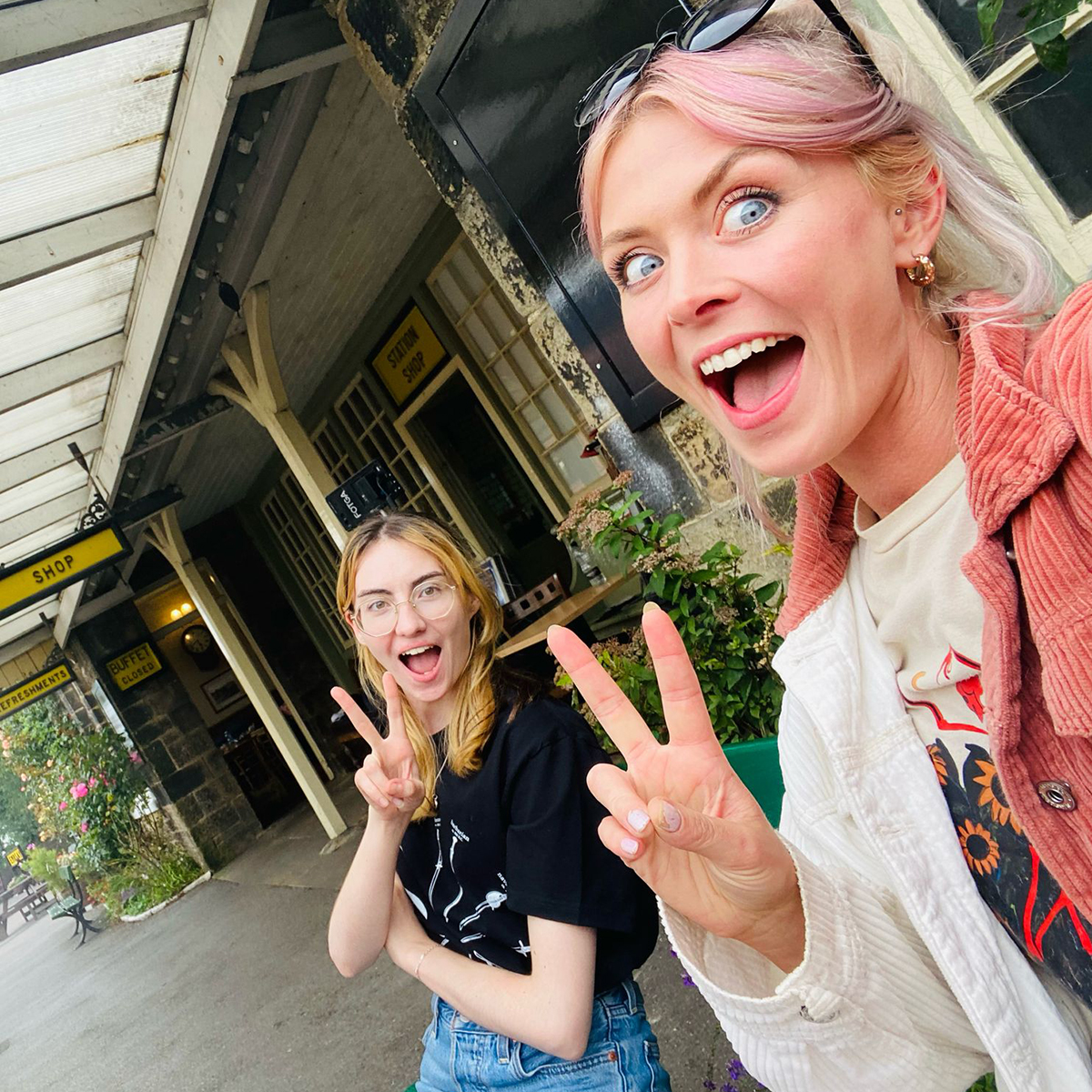
Behind the Scenes:
Wardrobe - Abbey Wilkinson
Hair & Makeup Artist (HMUA) - Rachael Armstrong
Both of them did fabulous work and provided such a positive vibe.
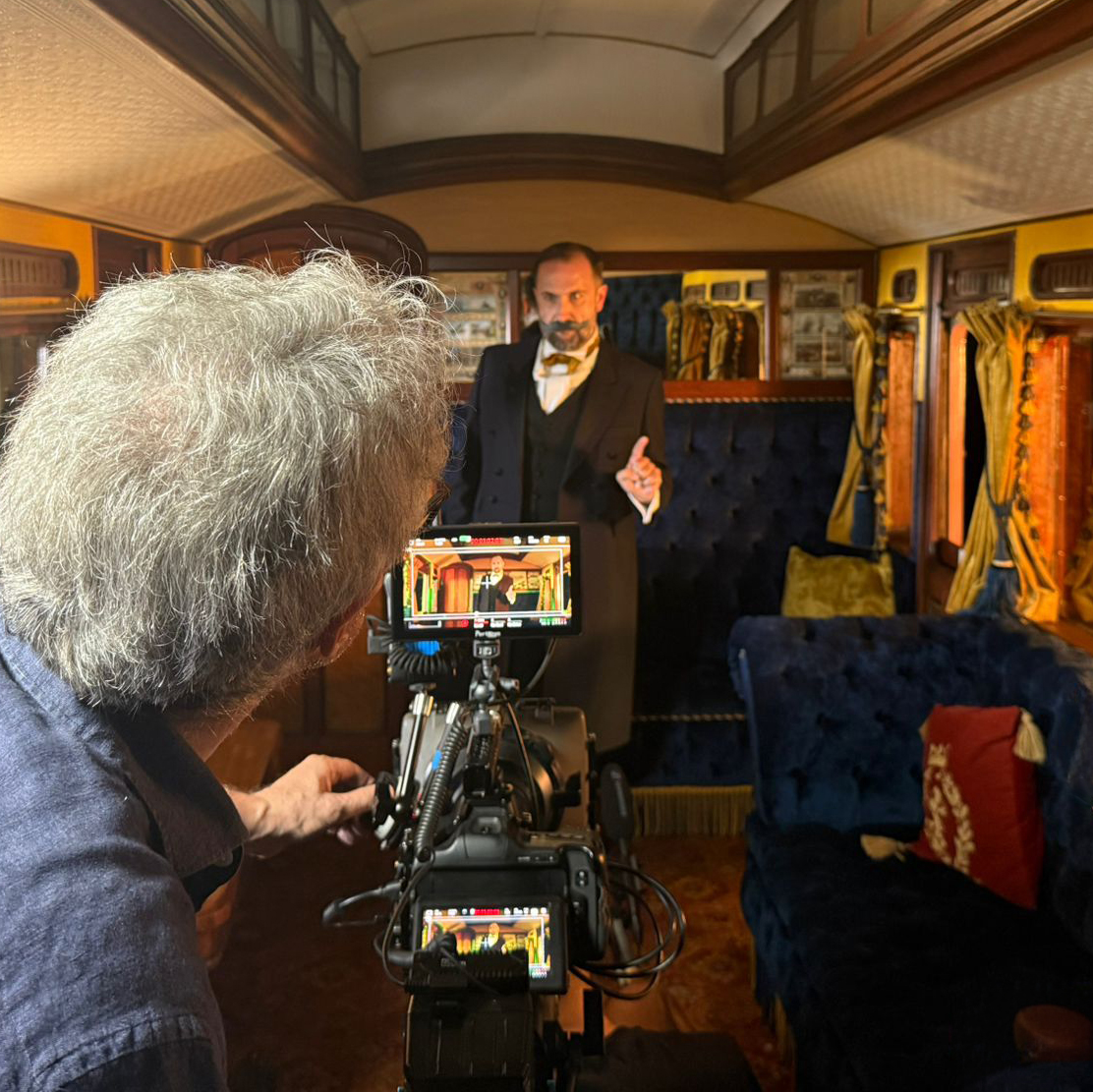
This production was a first for me, in many ways. It was my first shoot with Adam Bouabda, an old friend, and my first time shooting a film that was a period drama, a documentary, and a comedy. And as most of my work has been broadcast television and high-end corporate video, I had never worked on such an ambitious production with such a limited budget, and so with such a tight schedule, so few resources, and such a small crew. However, what we lacked in people and equipment, we made up for with experience, skill, passion, long hours, and hard work.
With the budget in mind and a period look being appropriate, I had to choose a camera system to shoot on.
Fortunately, the answer was very much to hand. Sea and Sky Pictures have two different modern Blackmagic cameras and some legacy Samyang cine prime lenses. I had used an older Blackmagic camera with my Canon lenses on a cinematic teaser shoot, a few years ago, and although it was an incredibly basic camera, with a good grade, it produced fabulously cinematic pictures when there was plenty of light. So, I was keen to see what these newer, higher-resolution, and more sophisticated models can do. After a week of testing and familiarising myself with them, I was happy the Blackmagic Pocket Cinema Camera 6K Pro would be my camera on this project, and the Samyang primes, which today are not exactly state-of-the-art optics, even for budget cine lenses, would contribute to the look I was seeking. These lenses are fast, T1.5, except for the 14mm T3.1, and while they are sharp, they don't have the clinical look of many newer “better” lenses.
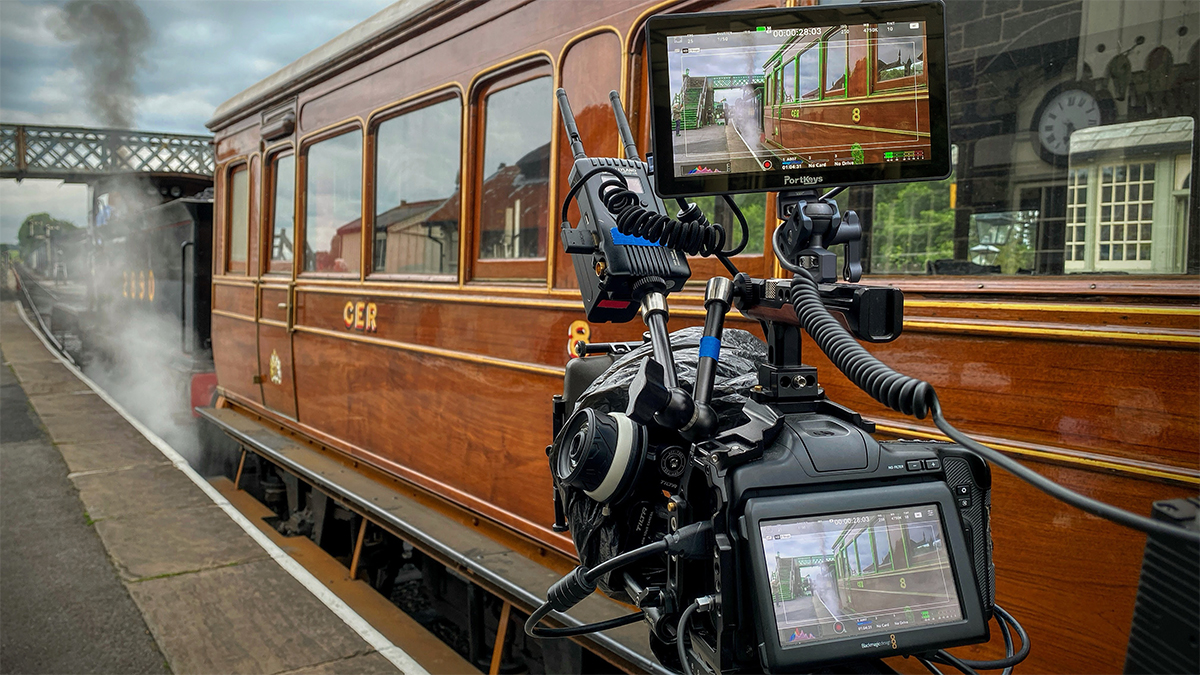
Next, I set about shooting a variety of subjects with them, under various lighting conditions, whilst using a selection of filters, to see how the combinations would perform. I found that Schneider Black Frost filters worked really well in conjunction with the 6K Pro in log, and using the Samyangs, producing a look that felt just right for our period engineering film.
I showed Adam the look, and fortunately, he loved it.
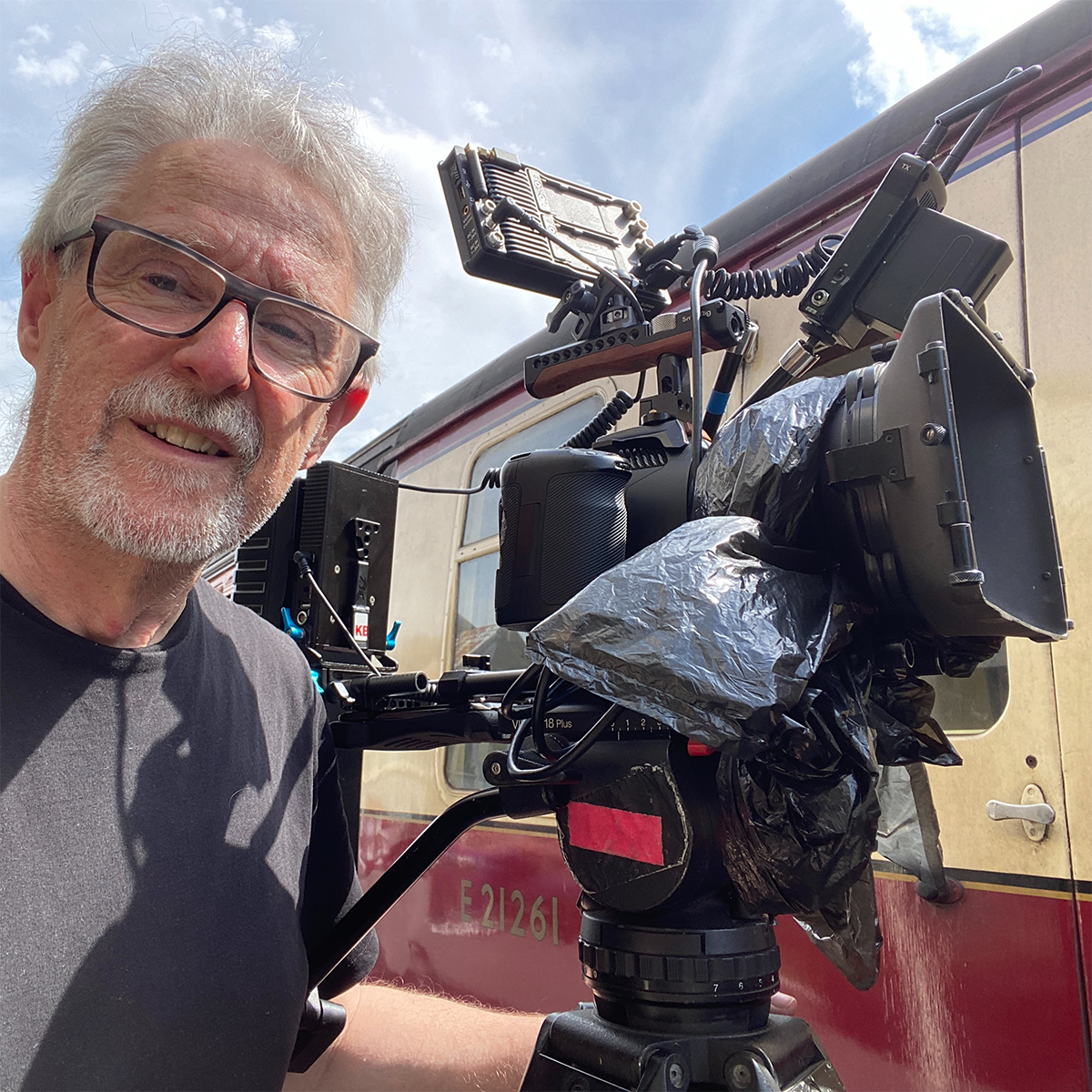
However, there was a problem. I did not have the correct size doughnuts for my matte box, to fit the lenses, and so I got creative. A black plastic bin bag stood in for the doughnut/Nun’s knickers, and I was all set.
Day 1 (Sunday) - Filming at Bolton Abbey and Embsay Railway Stations:
Our first scenes were in the waiting room and ticket office at Bolton Abbey Station, but we would only be allowed to start after the last passengers had left the station, around 5 pm.
For the waiting room setups, I used an Aputure 600D Pro with a 150cm Lightdome to balance the exposure with the scenery seen through the windows. Our heroes, Pease and Stevenson, entered intending to buy tickets to ride the next train while narrating the story of the railway. On entering the waiting room, they see and discuss a historic pictorial railway map of the North of England, and a painting of the Stockton and Darlington Railway on its opening day.
Then it was time to buy tickets for the next train, to the end of the line.
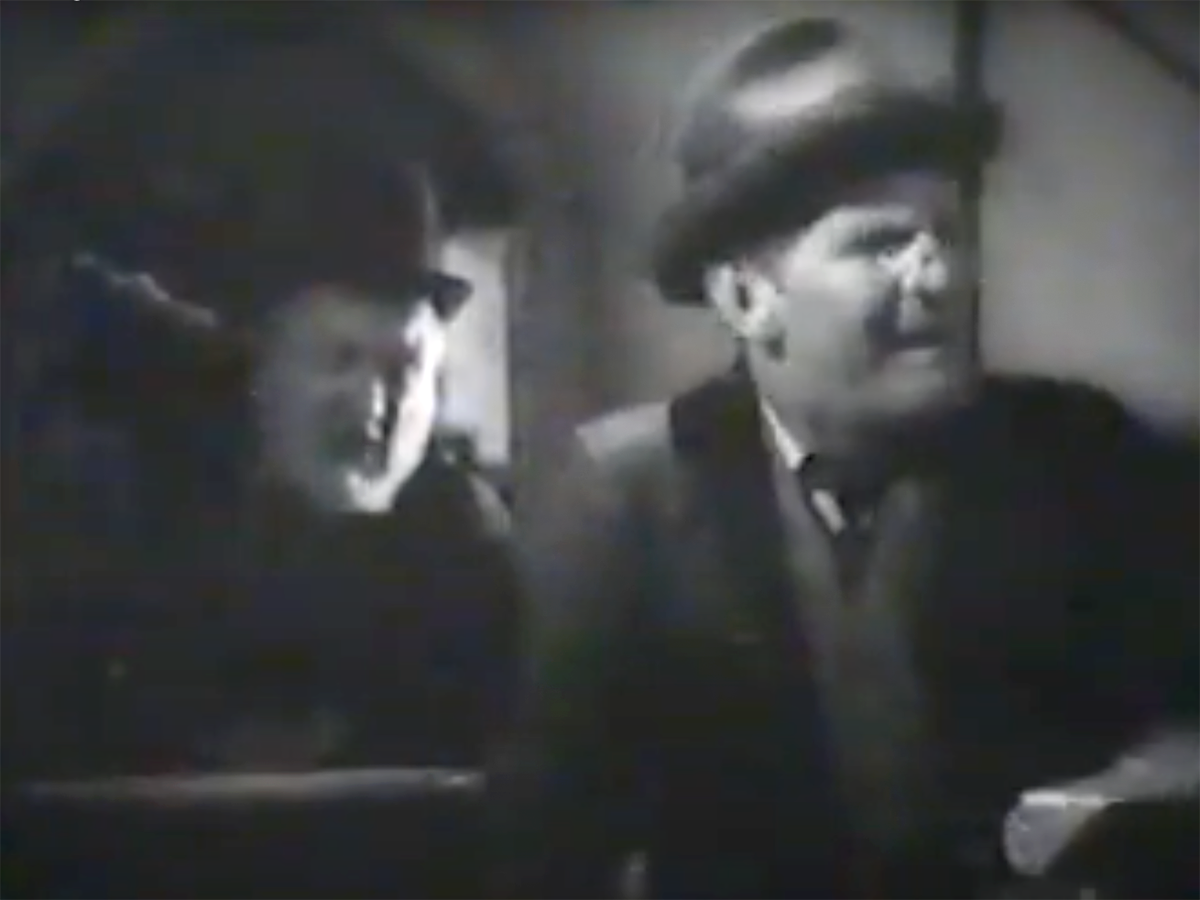
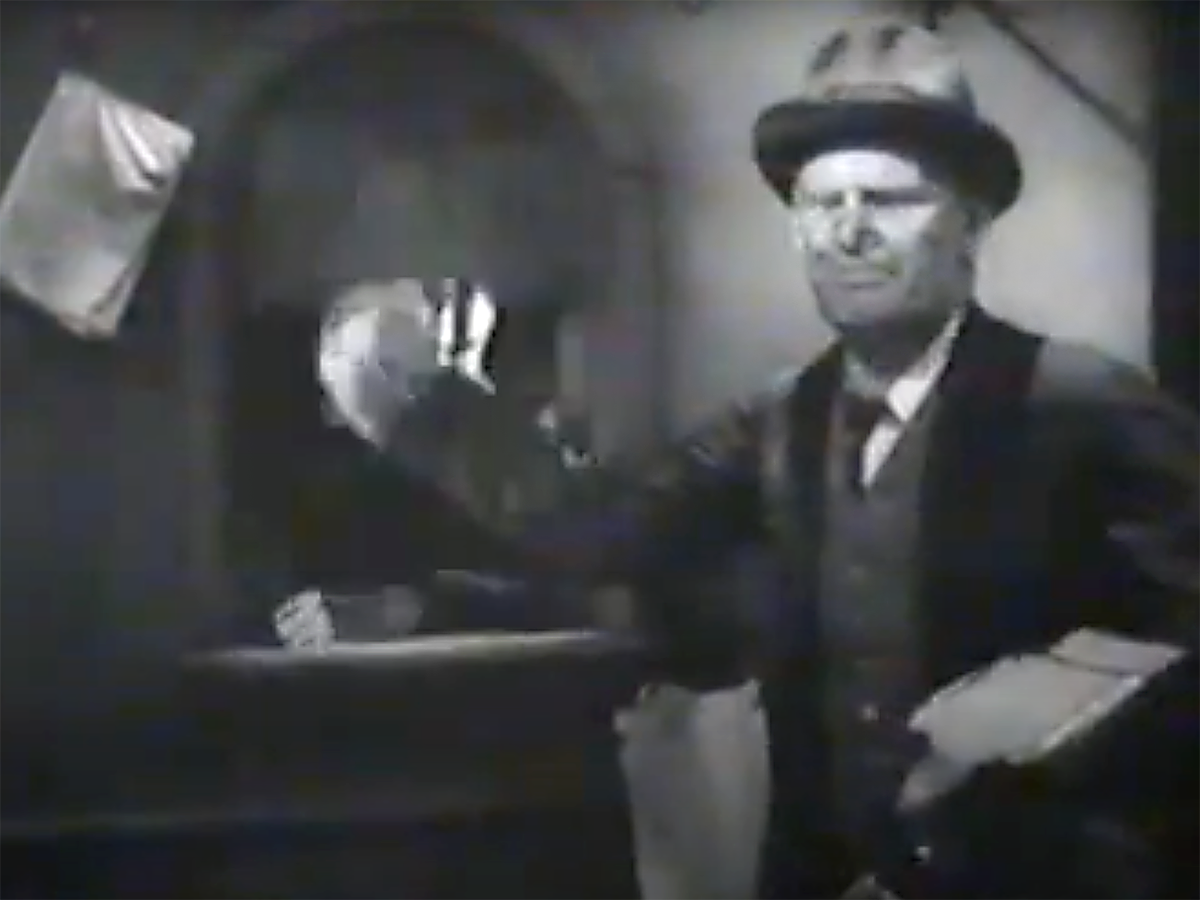
The ticket office scene tipped its hat to a comedic scene from the classic 1937 film, Oh Mr Porter. However, we had full daylight, not at all like Oh, Mr Porter’s night vibe. So, I had the windows nearest the ticket office hatch blacked out with molton draped over my mini-autopoles to create a hint of localised mood.
“Two tickets on the next train to the end of the line, please.”
The ticket clerk announces, “The next train is gone, and there is no such place as the end of the line.”
However, and eventually, they are offered tickets to Not the End of the Line, departing at 18:25, and so they take a ride to 20:25, not the end of the line, for the world’s railway story, obviously.
For this scene, I had a couple of my Aputure LS60X spotlights with small soft-boxes mounted overhead, shining vertically down, to replicate the lighting used in Oh, Mr. Porter, and boost the practical ceiling lights in situ, which by coincidence were very much as in the original black and white movie.
After filming the waiting room and ticket office scenes, we relocated to Embsay Station, a few miles down the line, where we had a couple of scenes to film that evening, in period railway carriages.
We had access to our chosen carriages for that evening and the next day. The next day, Monday, we would also have a locomotive with its crew.
All told, we were to film four main scenes in the carriages, each referencing iconic railway scenes from much-loved movies, Brief Encounters, North by Northwest, Butch Cassidy and the Sundance Kid, and Murder on the Orient Express.
The pressure was on, of course.
As Adam was keen to stress, it was a comedy, and the humour was more important than the usual priority of getting the highest production values on screen. Nonetheless, everyone worked enthusiastically to make this unique and quirky film as polished as possible.
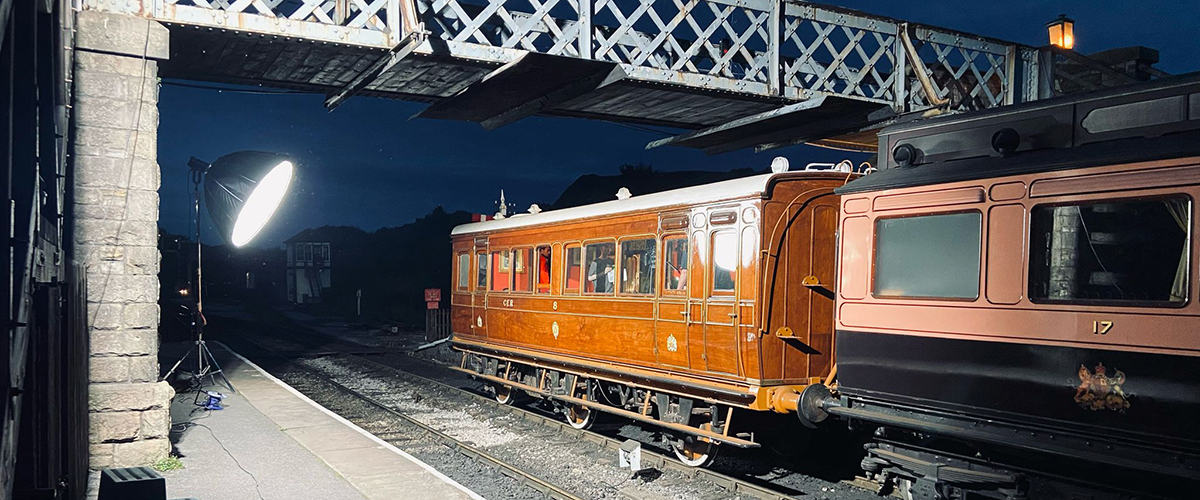
On arrival at Embsay station, it was getting dark, and we found that the carriages had been left at the wrong platform, meaning our mini crew had extra logistics to deal with, all against the clock, as our child actors were too young to work late into the night. Luckily, I had brought several hundred meters of power distribution, so I could provide basic lighting from both sides of the carraiges, and inside them, albeit having a pre-light shift and a gaffer with a van full of toys would have been far better, but this was not in the budget, and most likely the railway’s timetable would not have allowed it. So, we did what was possible, and more. Before too long, we were ready to roll.
As mentioned, this is a creative, comedic period drama, but at its core, it is a thoroughly researched documentary that recounts the historic story, with subtle railway movie references for added entertainment.
To our modern minds, one of the strangest things that was widely reported from the construction phase of the railway was when the workers tried to lay stone track ballast across Myer’s Flat, a marsh on the planned route, the ballast kept sinking. Back in the day, this was widely blamed on the pixies who were thought to live there. This belief appears in most of the records of the time.
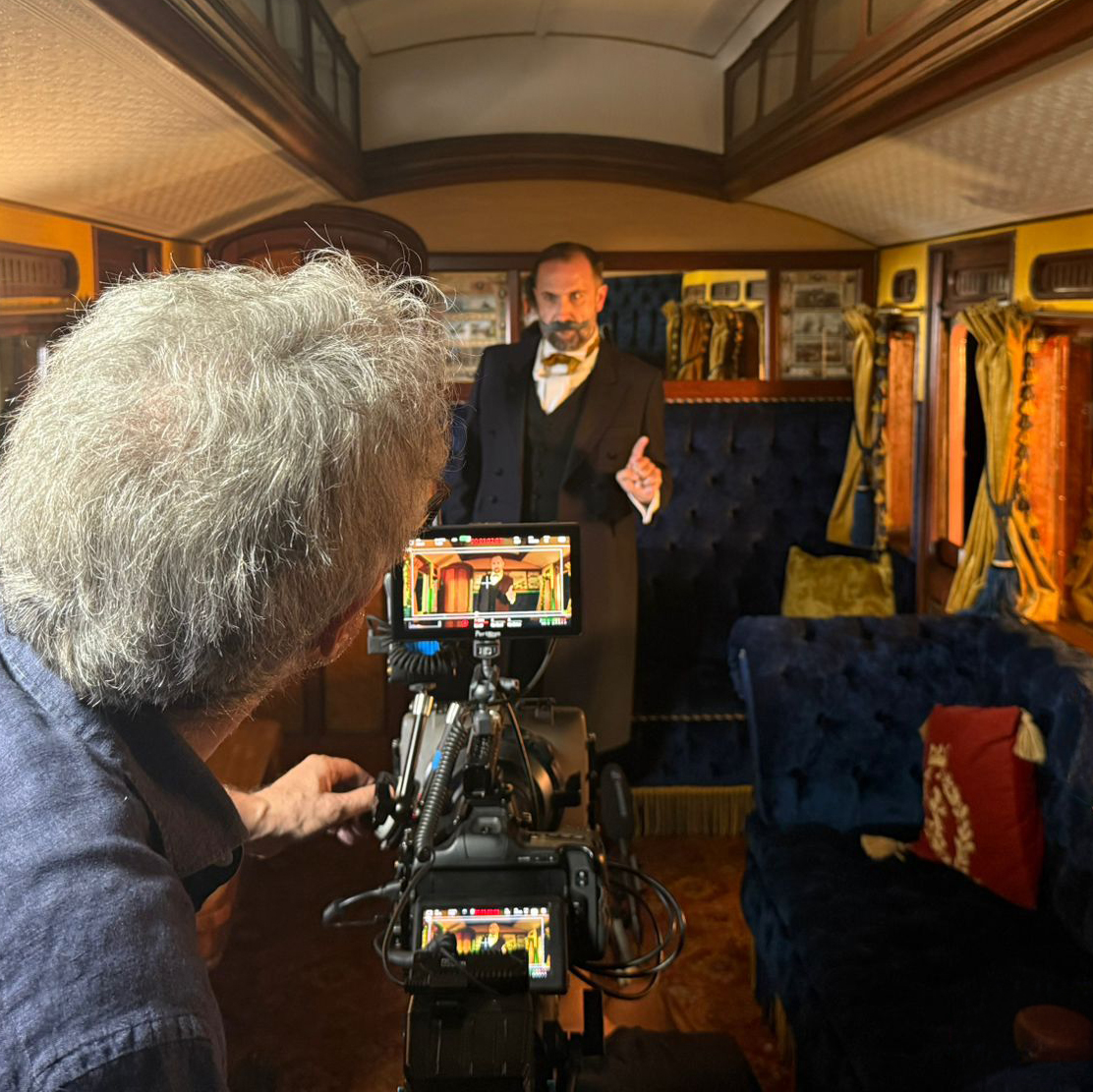
The first scene we filmed on the train referenced Murder on the Orient Express, where Hercule Poirot reveals the identity of the murderer.
In our case, all the assembled characters, including Lord Darlington, a Parliamentary clerk, and the pixies from the marsh, are accused of trying to stop the march of progress and the betterment of mankind.
Ideally, this would have been a daylight scene, as would all of them, but our schedule required an after-dark shoot. So, I accepted it was a night scene, which felt OK for a Poirot reveal. I wanted to use greenscreen in the windows, but this idea was rejected due to time constraints. So, I used two Aputure LS600D Pros shining through the windows on the far side, one about head height and the other a little higher, from the steps of the nearby bridge, to provide interior ambience and two Aputure LS300X lights fitted with small light domes, positioned on the near side platform, to provide subtle key lights. I used Aputure MC Pro and Nanlite PavoTube lights in the ceiling to suggest interior “practicals”. I deployed our remaining LS300s to add a subtle touch of nighttime detail seen through the windows, with the large period platform light fixtures as feature practical lights, hoping they might appear in one or more of our shots, to add depth and character.
Our next scene that evening: “I promise to pay the bearer, on demand, the sum of £…”
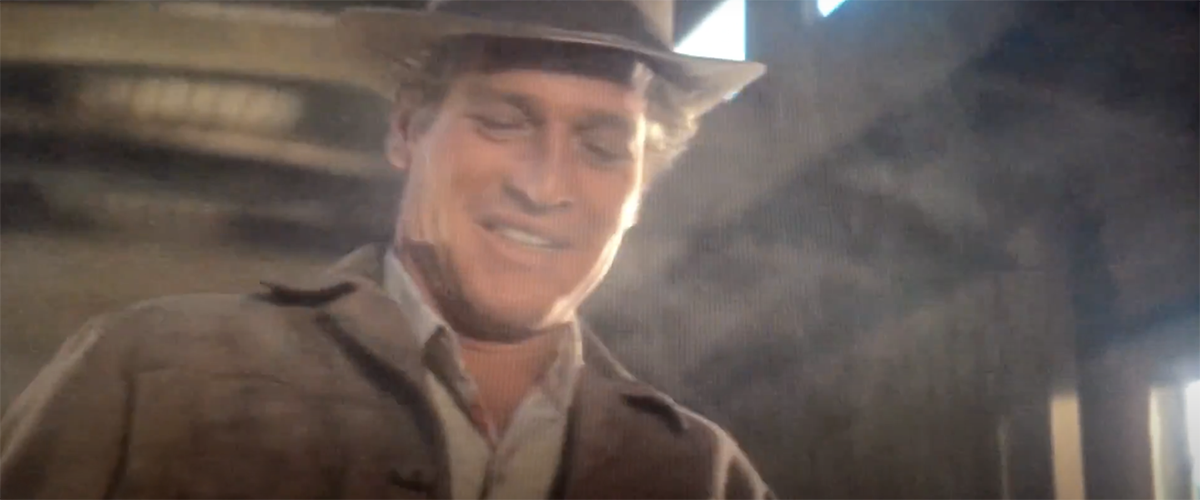
This represents when Lord Darlington tried to destroy the reputation of the bank financing the railway. He came to the bank to demand gold in exchange for a huge sum in paper money, fully expecting the bank would not have the gold available, and so would be in breach of the promise on paper money notes, “I promise to pay the bearer on demand the sum of….” As it happened, the bank became aware of his scheme and arranged to have the gold available. We depicted this in a period railway carriage, dressed as a period bank, and referenced the scene from Butch Cassidy and the Sundance Kid, when they stop the train, blow up the safe, and escape with the swag.
Day 2 (Monday) - Filming at Embsay Station (continued):
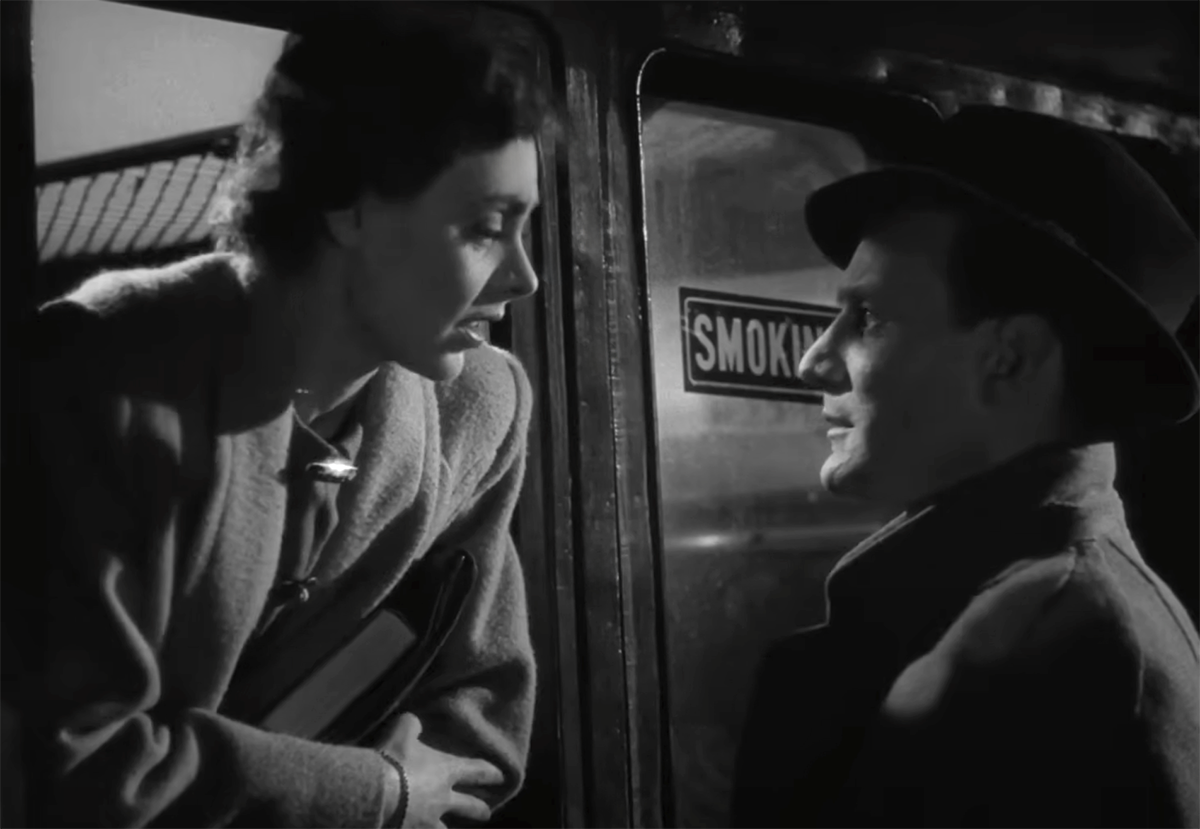
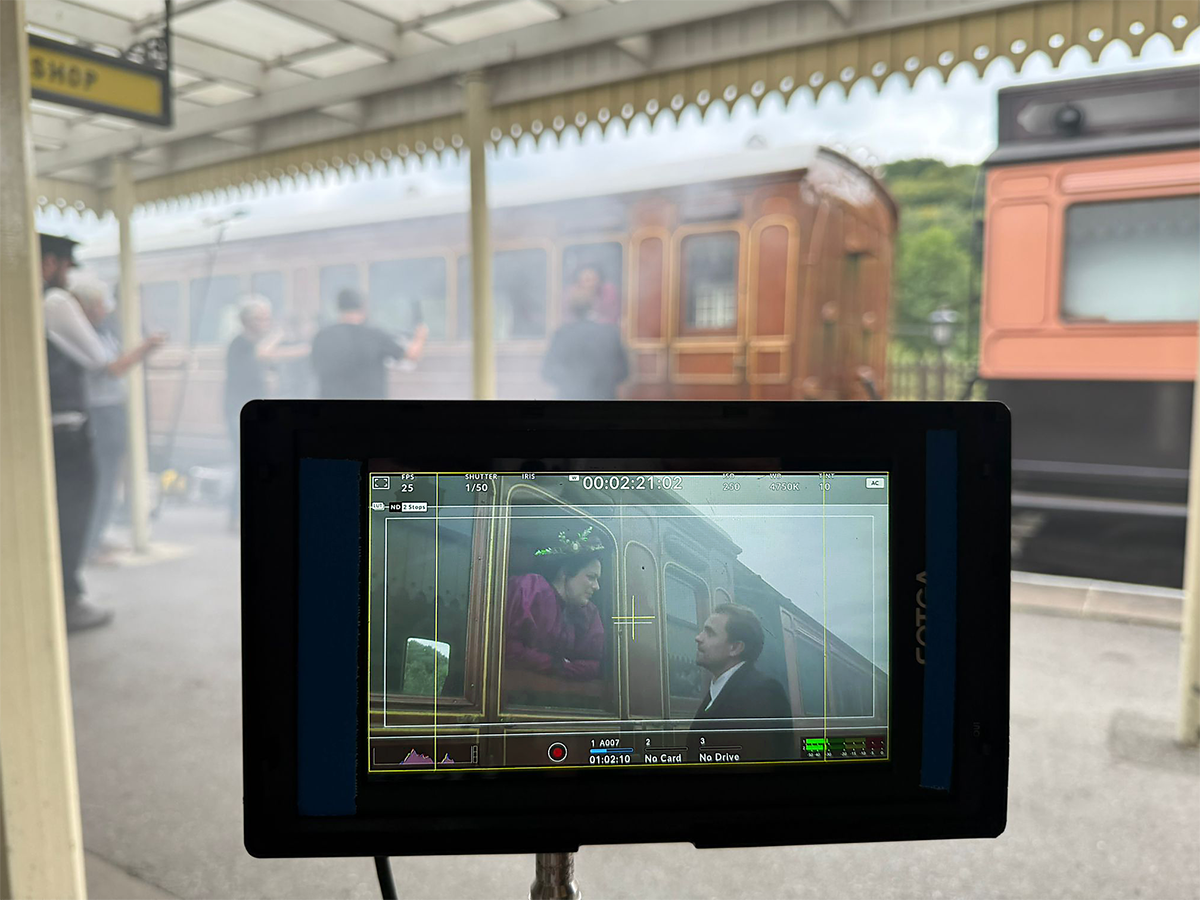
We filmed a scene that depicts the widespread resistance to, and the fear of, the believed dangerous nature of steam-powered locomotives. This was conveyed by a conversation between George Stevenson and his lady love, as she is about to depart on a train, referencing the goodbye scene in Brief Encounter. I copied the camera move, and generous amounts of haze made our daylight version of the original night scene in the classic movie work for us.
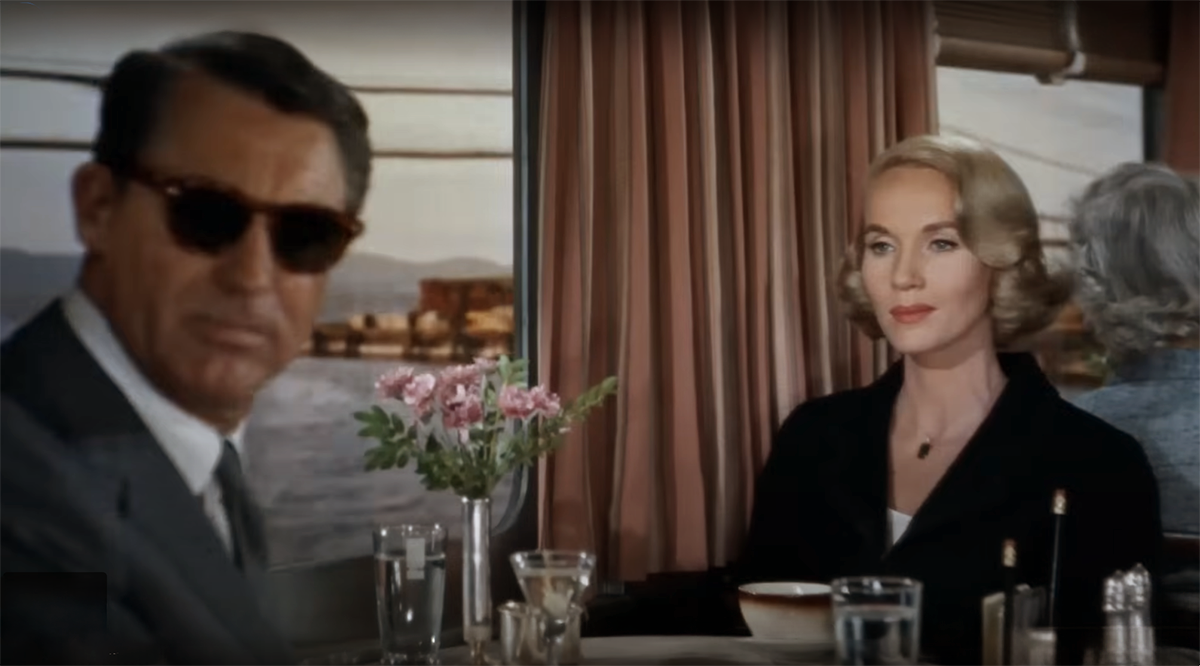
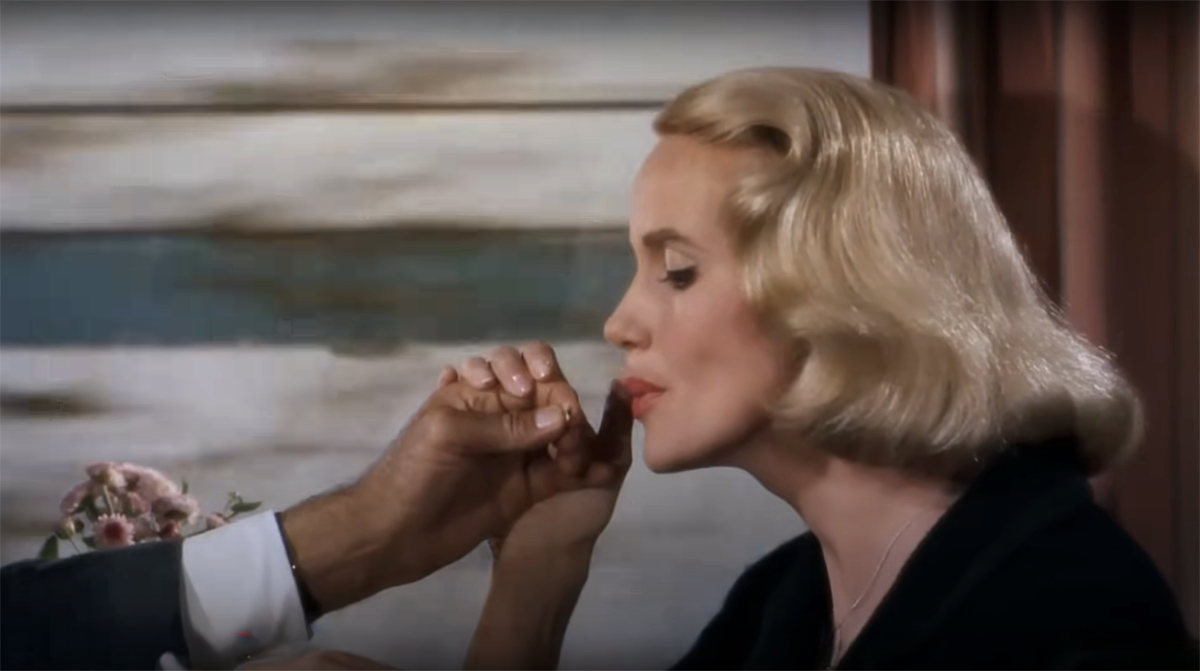
Another scene featured a conversation between George Stephenson and his woman, seated opposite each other at a table on a period train. This conversation explains George Stephenson’s respect for, and belief in, the irresistible power of nature. I shot this with a reference to the seduction scene, on a train, in North by Northwest, when Eva Marie Saint flirts so very seductively with Cary Grant.
I used green screens on the platform, seen through the windows, to use footage filmed from a moving train, by our B camera unit, on our first day, while I set up and filmed the ticket office scene, to reproduce the moving train vibe seen in the original movie.
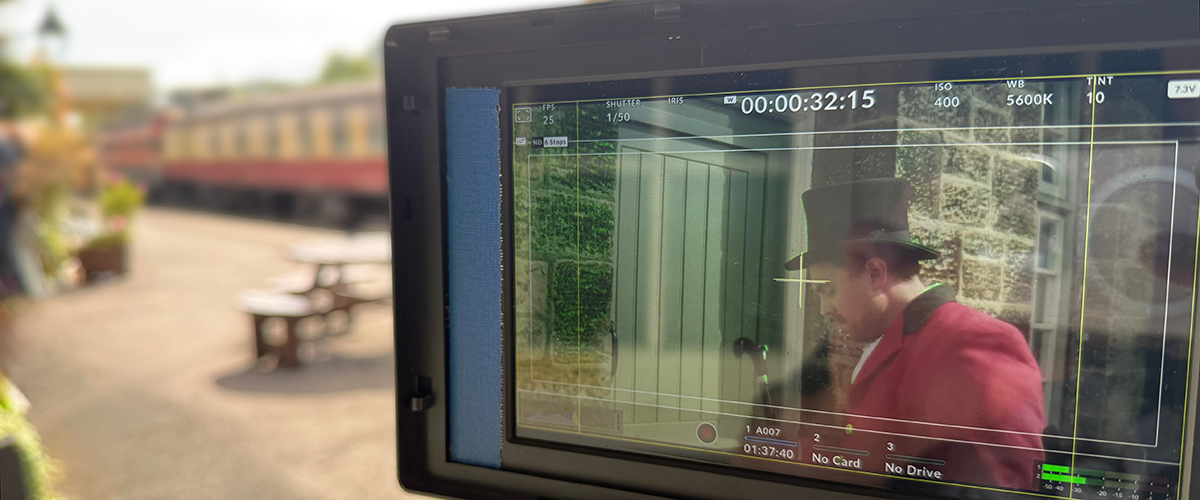
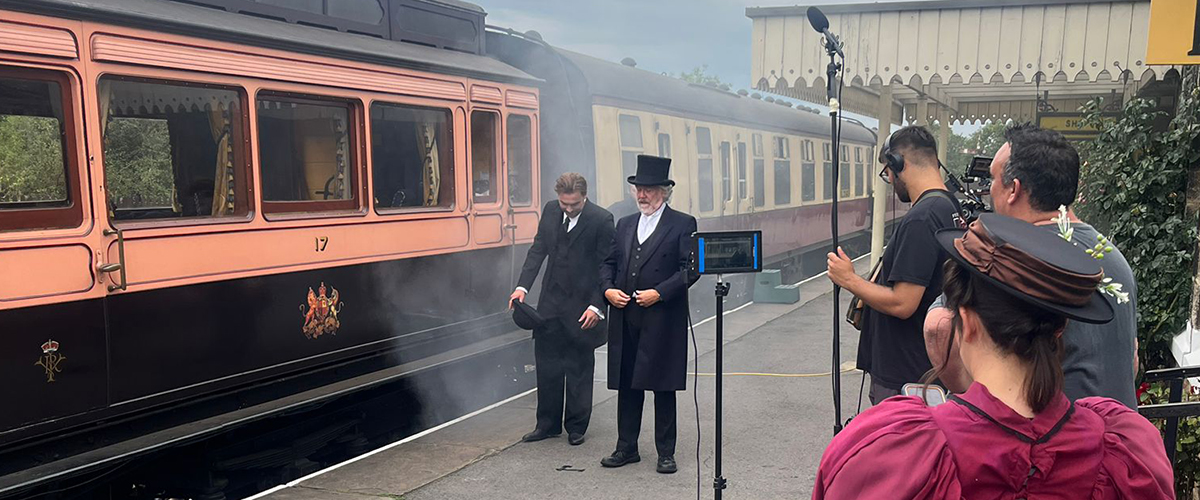
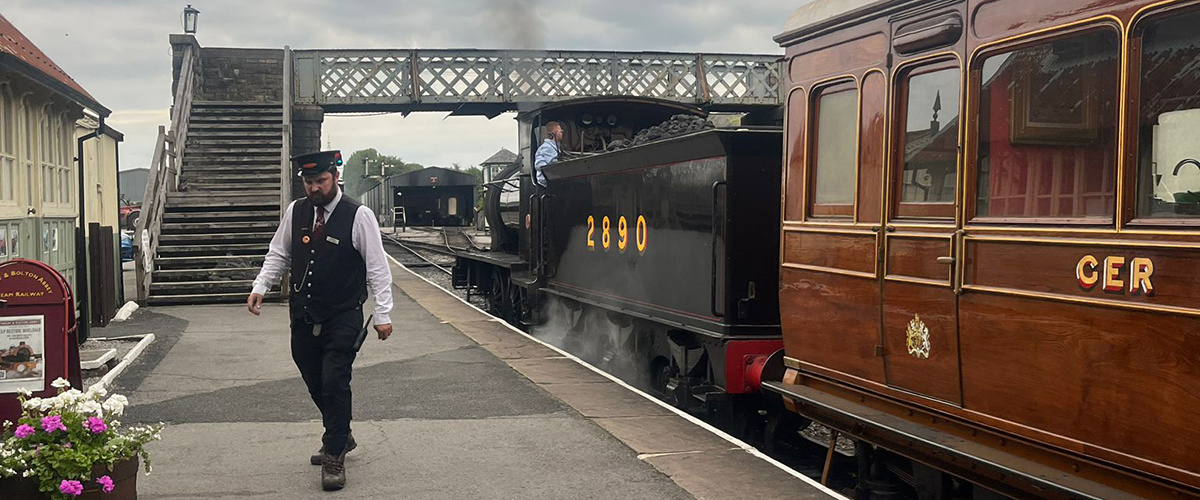
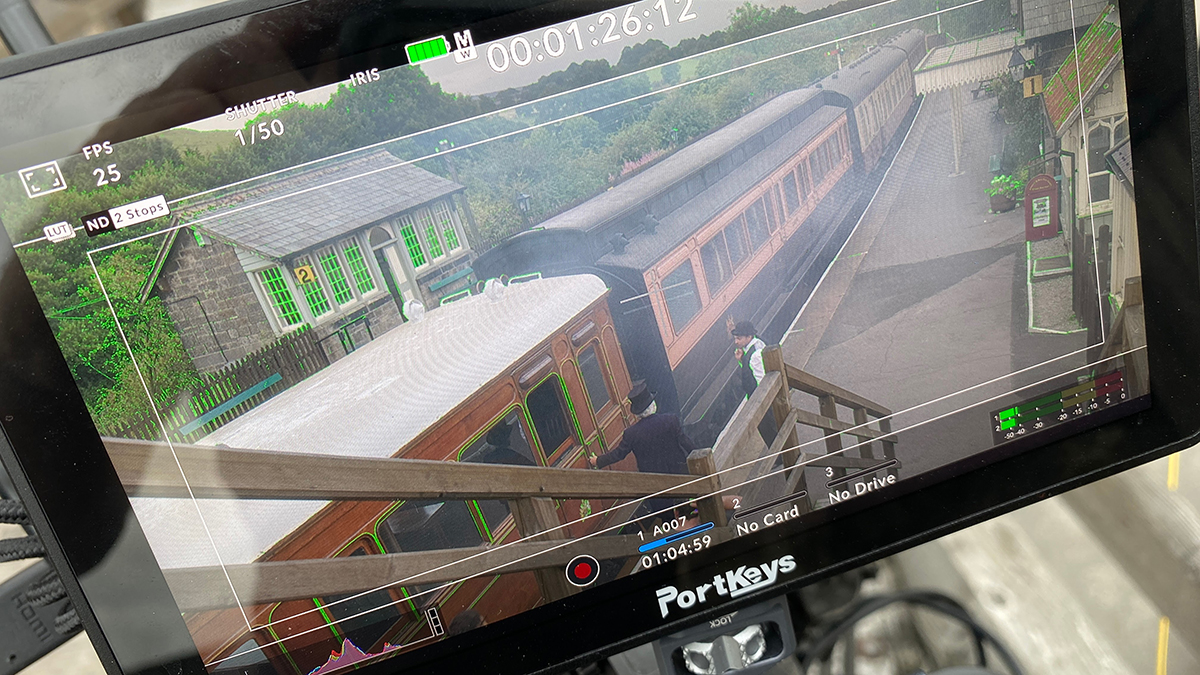
Of course, we had links and B-roll shots to film, which included interiors and exteriors of the carriages and the train as a whole, and the station.
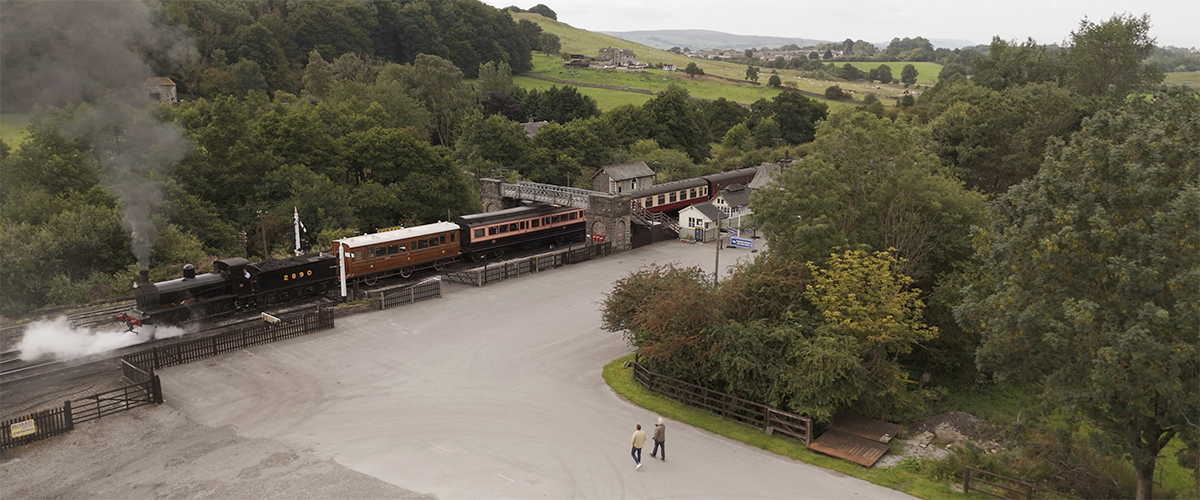
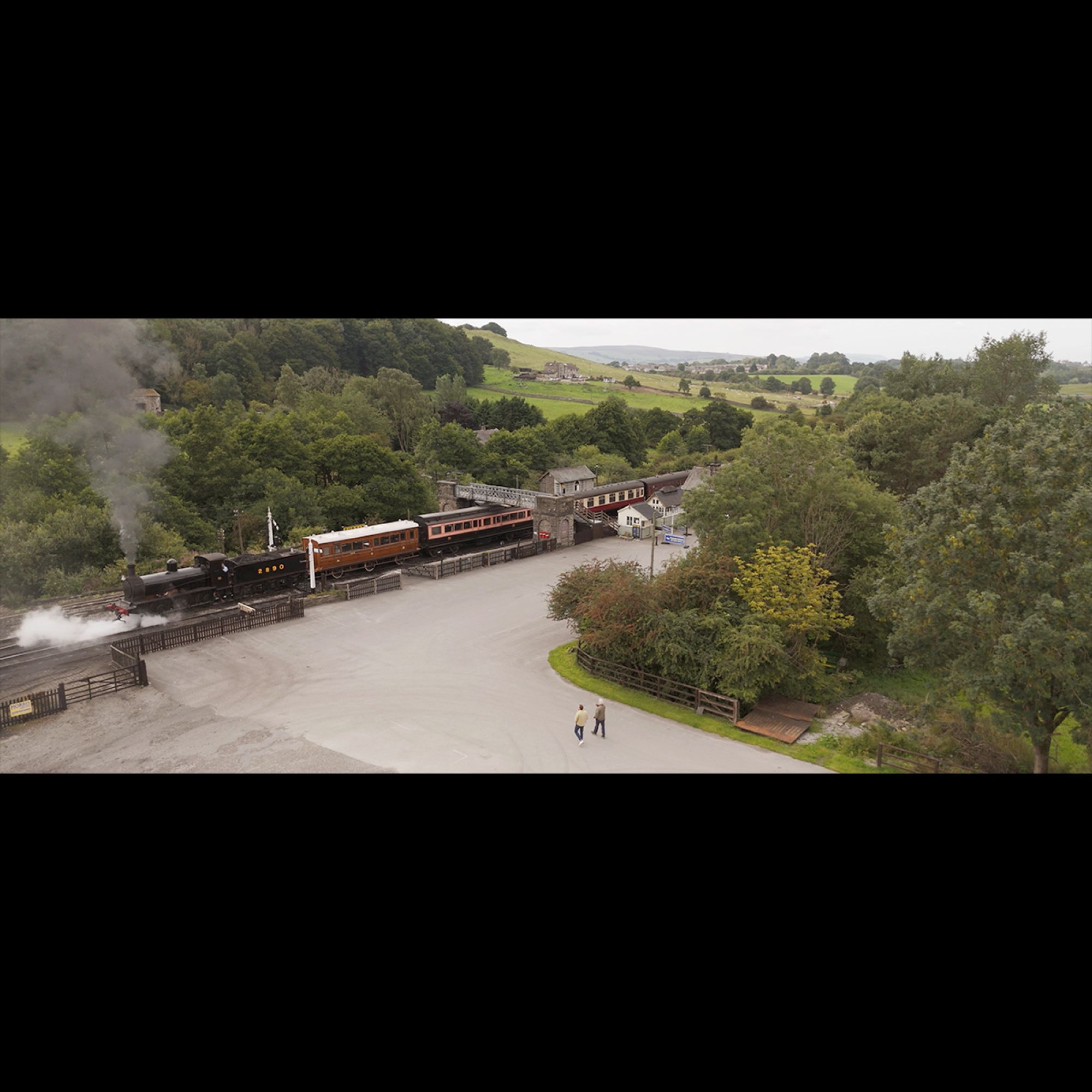
The last and most important exterior sequence of the day was the opener.
DJI Mini 4 Pro - Drone:
I positioned my drone high to establish our rural railway station location, then as it descended slowly, drawing the audience in, it captured the next train departing, and revealed and introduced our heroes walking into frame.
With my drone shot in the bag (in one take), lucky me, I used the main camera to film ground-level shots of our heroes as they continue towards the ticket office, and we hear their conversation, establishing the story that they are about to narrate.
Day 3 (Tuesday) - Green Screen Chroma Key - Studio Shoot:
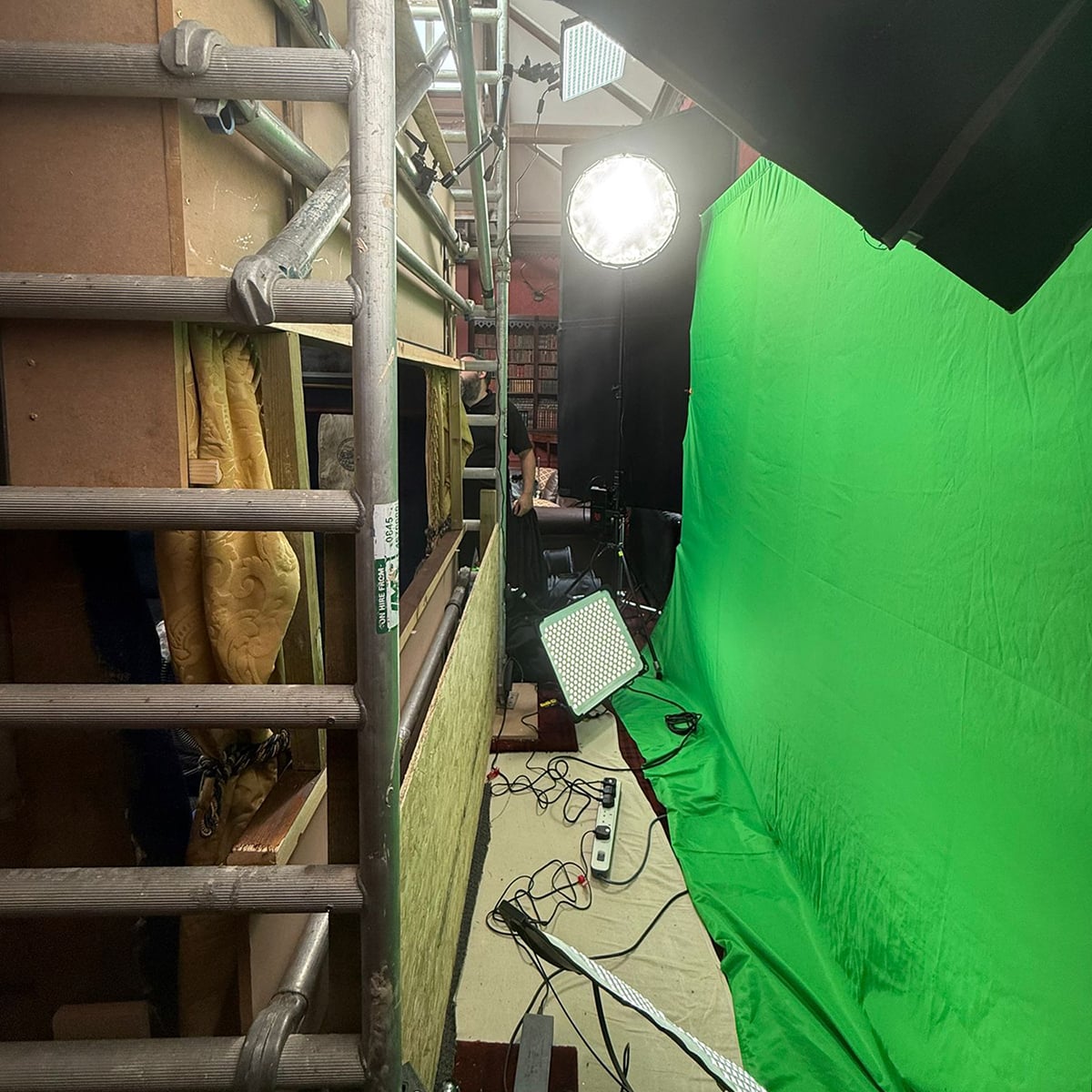
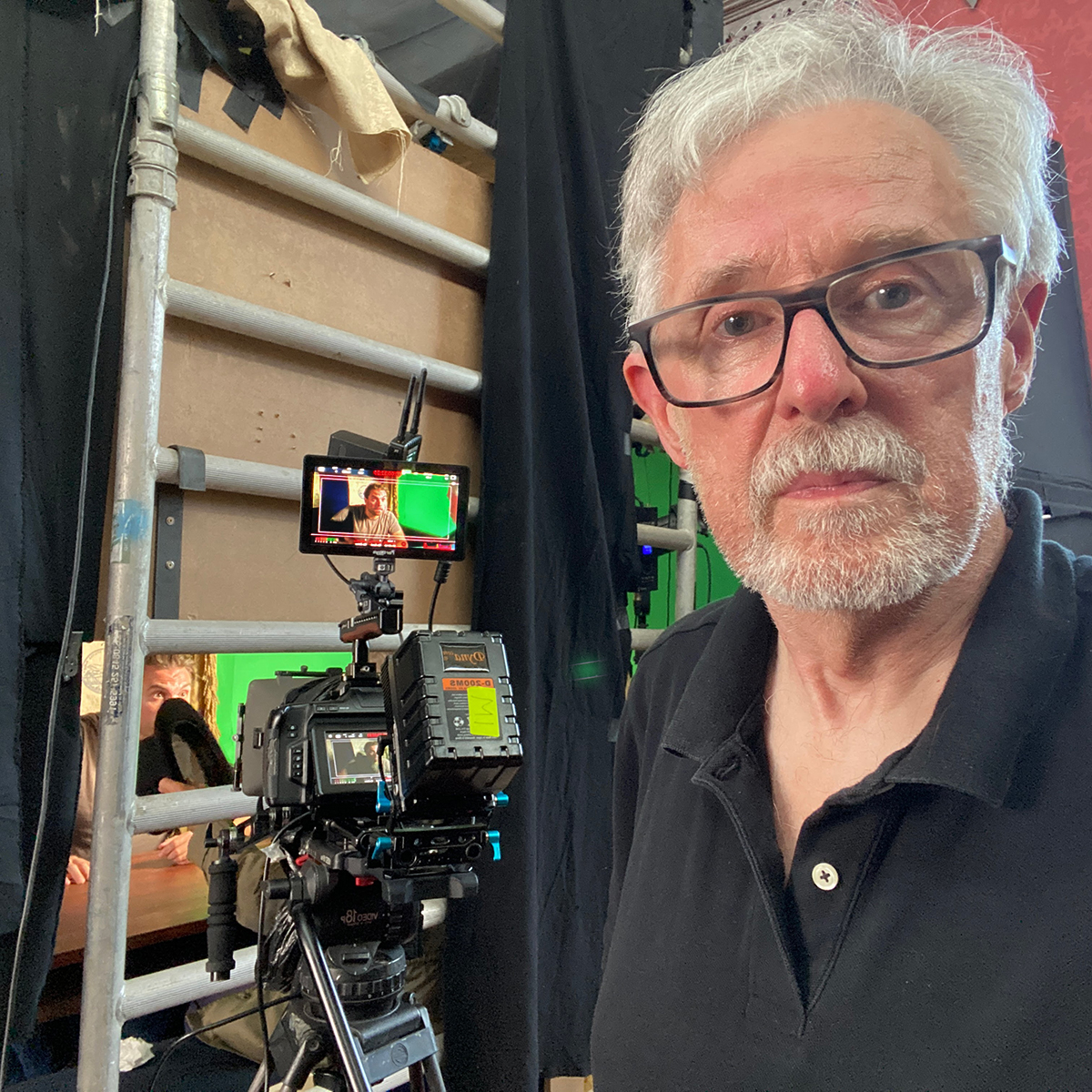 Keith was not just the writer; he did a great job of designing and building the set, which realistically represented a Victorian railway carriage compartment. He even included removable seat backs, allowing me to shoot over-the-shoulder shots, but the space for our greenscreen was extremely tight. This made it difficult to light the chromakey cloth evenly, especially as we had to contend with a daylight element, which, of course, is a constantly varying factor. Nonetheless, we managed.
Luckily, we were blessed with a rural location and had no audio issues. The location was as quiet as a pro studio and quieter than some I have worked in.
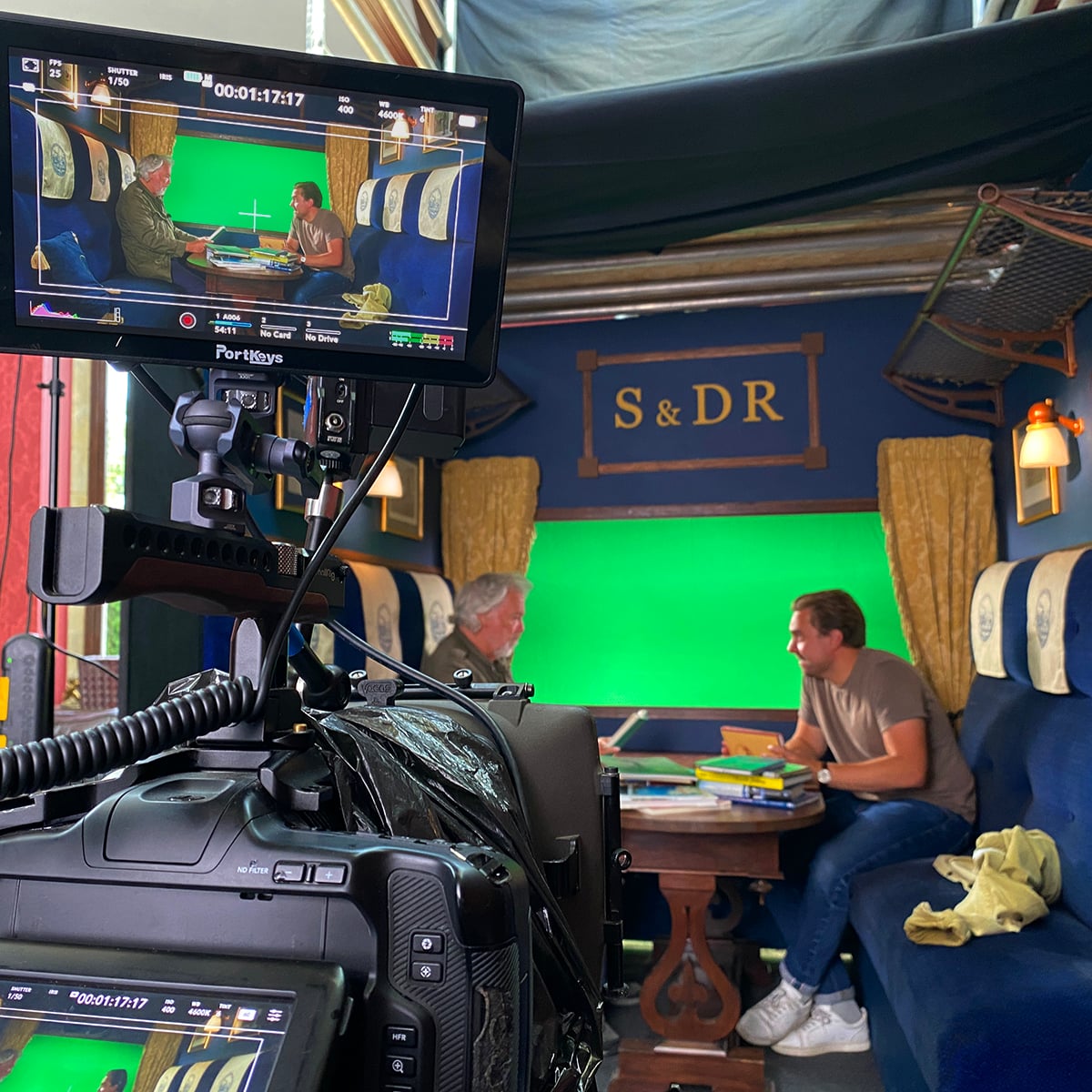 On day 1, we filmed our heroes buying tickets to Not the End of the Line. On day 3, we shot a scene representing that train journey. The conversation on the journey is about the difficulties getting the Act of Parliament and some technical details.
There was no power for the bulkhead lights, so my tungsten Dedolights, tightly spotted and metered so both lights exactly matched in brightness, provided the practical illumination effect.
Our B unit’s landscapes filmed from a moving train would drop into the greenscreen to complete the effect.
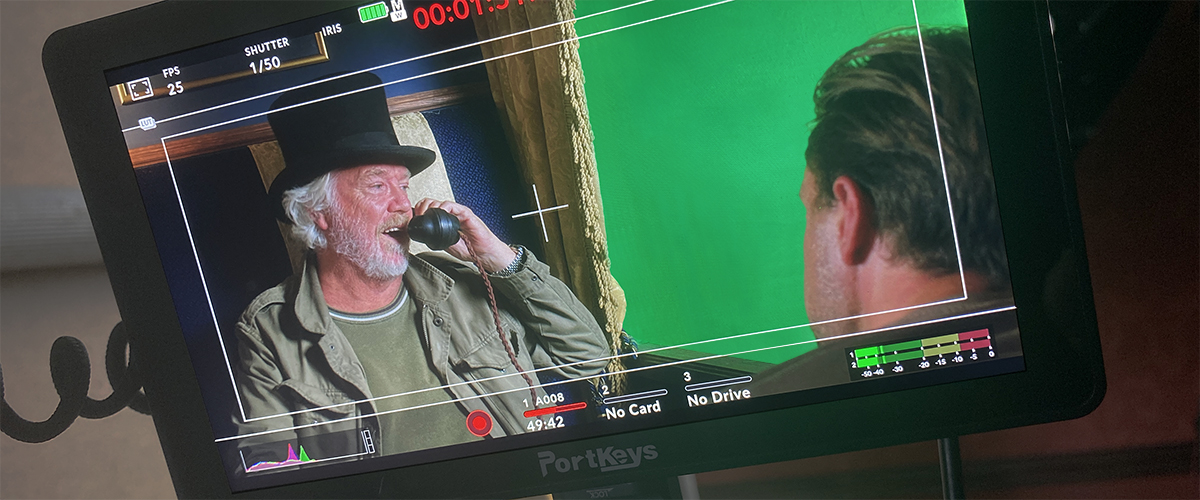
During the journey, a phone call was received from the Director of the proposed Liverpool and Manchester Railway. This device is used to explain the success of our railway, the extra locomotives being built, and the line being extended to Middlesbrough.
Day 4 - Credits:
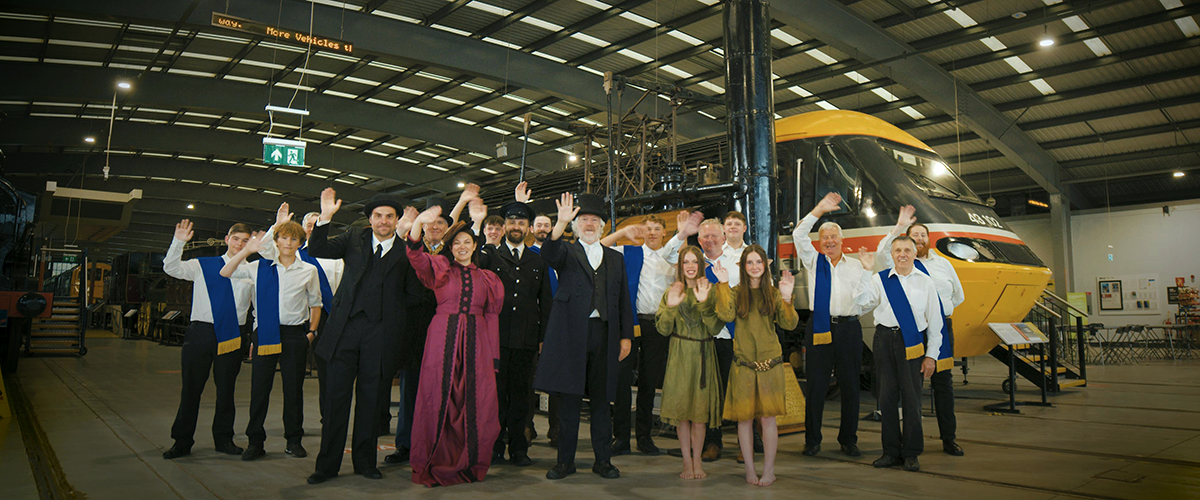
Our credits scene features the cast waving to camera while standing in front of locomotion 1, and a 20th-century train.
This was filmed at Locomotion Shildon, a local railway museum, and the permanent home of Locomotion 1.
The clip loosely references the credits scene from The Railway Children movie and illustrates the continuation of the story of the world's railways.
This scene was filmed by our director, Adam Bouabda, acting as 2nd. unit DOP.
End Board - but obvioulsy - Not the End of the Line