Seagrass & Oysters - Documentary
ARD (German national broadcaster)
DoP, Documentary Shoot in Paradise.
October on the West Coast of Scotland is heaven on earth, a time and place that just makes me feel amazing. So, I was delighted in October 2021 to be booked by regular client, German national broadcaster ARD, to shoot a documentary In this fabulous paradise.
I enrolled one of my go-to sound recordists, Matthew Birch, and headed to Glasgow to meet our Producer, Kristina, who flew in from ARD's London office.
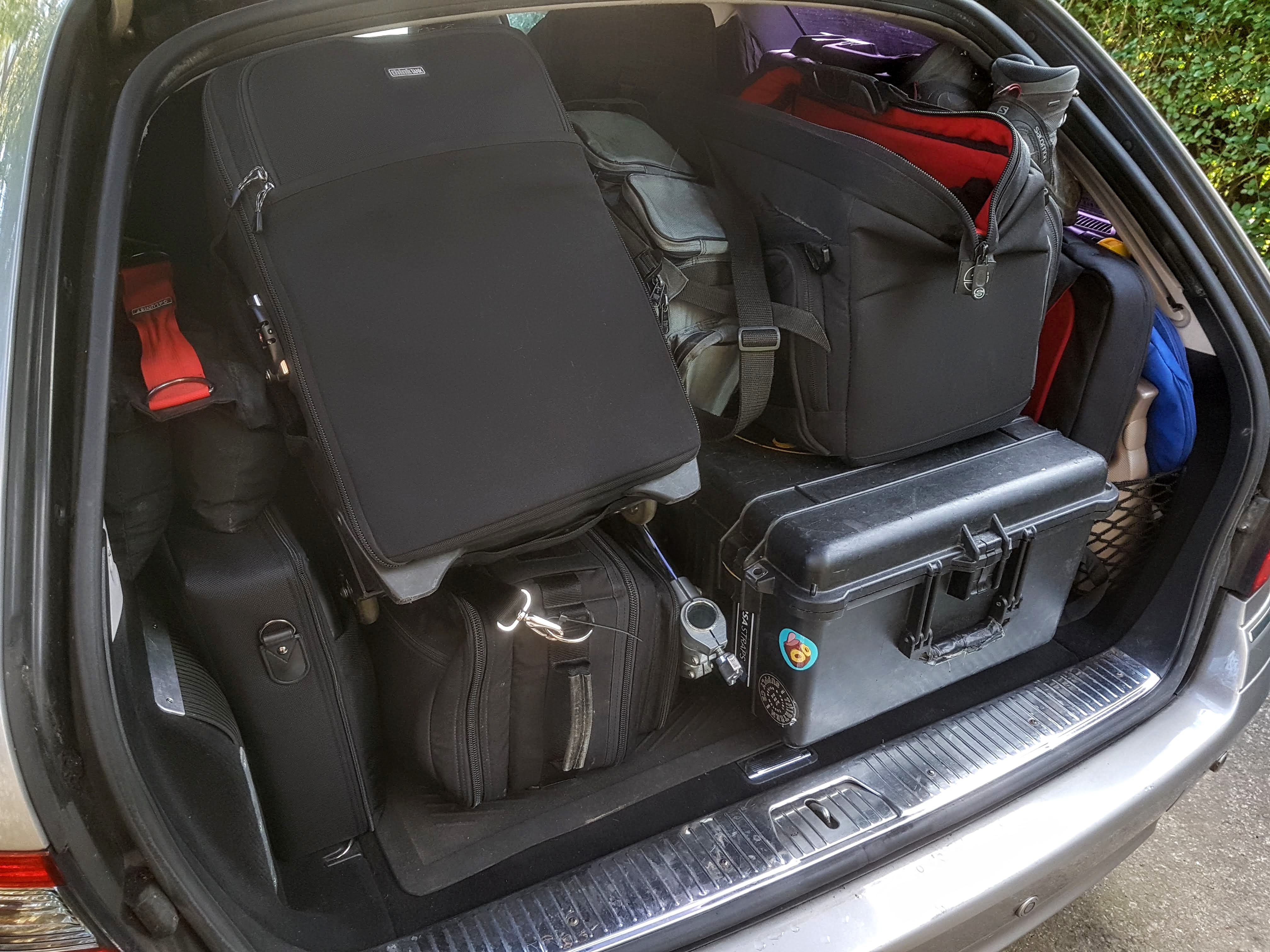 I had a car full of equipment but one notable item was missing, and it was on my mind. I had never managed to find a workable raincoat for my Sony FS7 camera.
So, while enjoying breakfast in our Glasgow hotel, I asked our waitress, do you have any clear plastic bin liners? Two minutes later, I was fully equipped.
We had a delightful drive to our first location. During the journey, we all got to know each other, and Kristina briefed Matthew and me about the story we were to shoot.
Our mission was to film the story of a remote and tiny community engaged in a massive project to restore the seabed of their vast Sealock. Loch Craignish is about 9 km/5.5 miles long, and like so many other marine areas around the world it has been devastated by years of industrial-scale trawling, which scoured the subsea ecology into oblivion. I was fascinated and excited by this story of passion, hope, and a community pulling together undaunted by the scale of their enormous and vital project.
The answer, it seems, may be seagrass, which has an astonishing ability to capture environmental carbon indirectly, from water. The world's oceans store about 50 times more carbon than the atmosphere and seagrass captures carbon even more quickly and more effectively than rainforests. But there are other reasons seagrass is vital. It is unusual for a maritime plant because it has roots that stabilse the seabed, so its meadows resist coastal erosion. They also provide an excellent home for young oysters. One oyster can filter 150 litres of water per day, removing contaminants, and so keeping the water clear resulting in the seagrass benefiting from more sunlight, helping it absorb more carbon from water and providing other marine species with important feeding grounds. This restoration project could have implications far beyond Loch Craignish. Applying the lessons being learned by the people engaged in restoring its ecosystem in so many other similarly devastated places could have a truly global impact
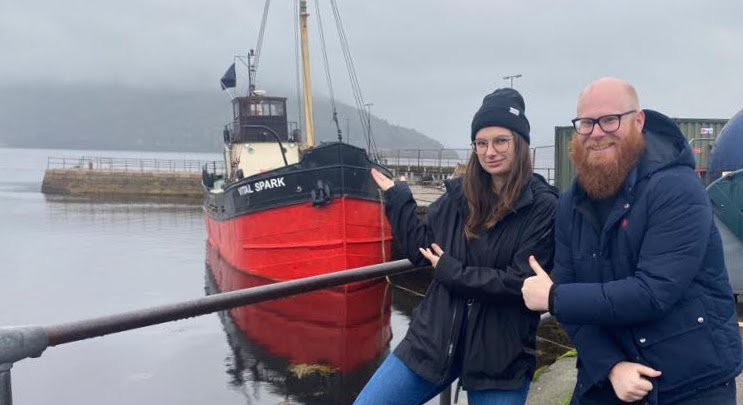
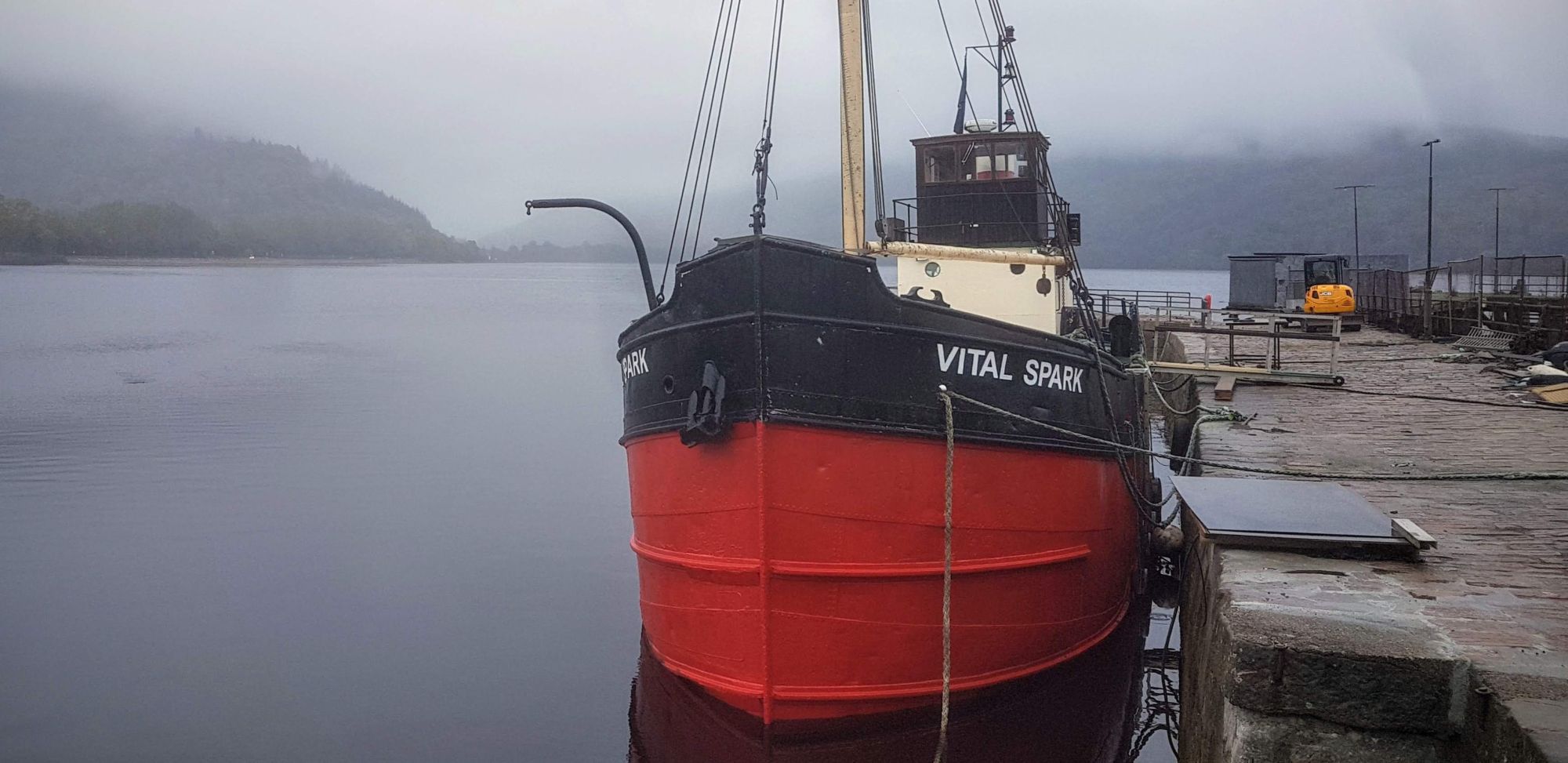
Mid-morning, we stopped briefly to stretch our legs. I was delighted to see Vital Spark, moored nearby. Of course, my colleagues had never heard of the puffer. Kristina is German, and Matthew is too young. Vital Spark was the little ship (a puffer), that starred in the eponymous 1960s BBC Scotland TV series, set among the Western Isles of Scotland in the 1930s, based on the books, written by Neil Munro and named after the captain of the Vital Spark, Para Handy. These puffers were a ubiquitous sight back in the day, transporting all sorts of cargoes between Glasgow and the countless remote communities along the coast, and on the many nearby islands. A photo opp. and a breath of fresh air, and it was time to continue our journey.
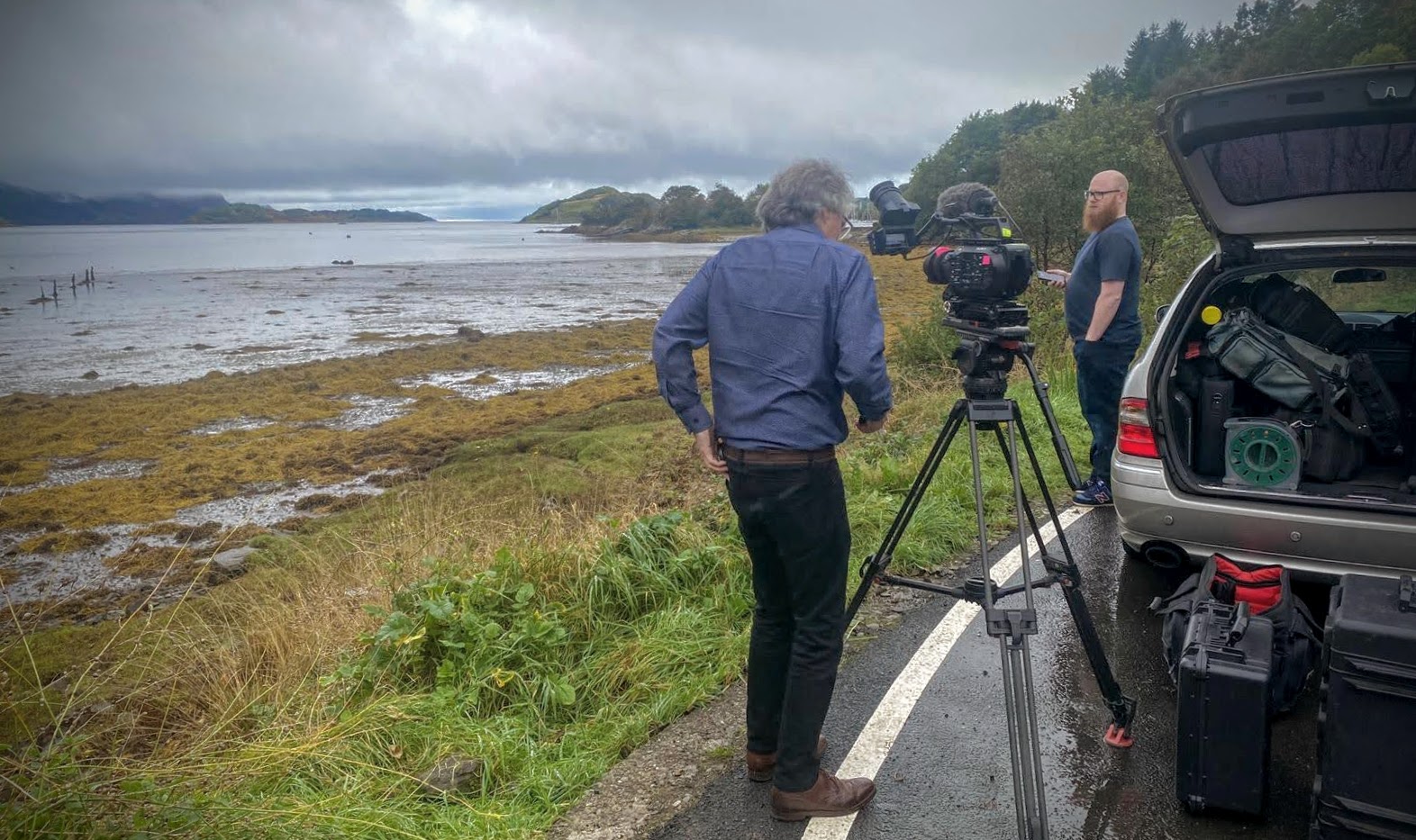
We were ahead of schedule, so as we approached our first rendez vous, I grabbed some appropriate GVs. You can never have enough B-roll. Yes, it was drizzling, but not enough to break out my new camera raincoat. The loch looked very atmospheric, and the editor would love me for it.
Our first shoot would be an interview with a mum in her home, where we would also film her kids painting pictures of their community's ecological project. I filmed Mum, standing in her kitchen, lit by the natural light from the window and from my Fomex FL 1200 Bicolour LED light, with softbox. She was very informed, engaging, and a great communicator. When I came to shoot the kids and their artwork, it quickly became obvious that these children, who were not even teenagers, were hugely impressive. They were extremely knowledgeable and passionately committed to the regeneration project and had an unbelievable ability to communicate on the subject.
I so wish I had some pictures of them.
We shot some more B-roll, the exterior of their larch-clad house, and the children playing in the garden.
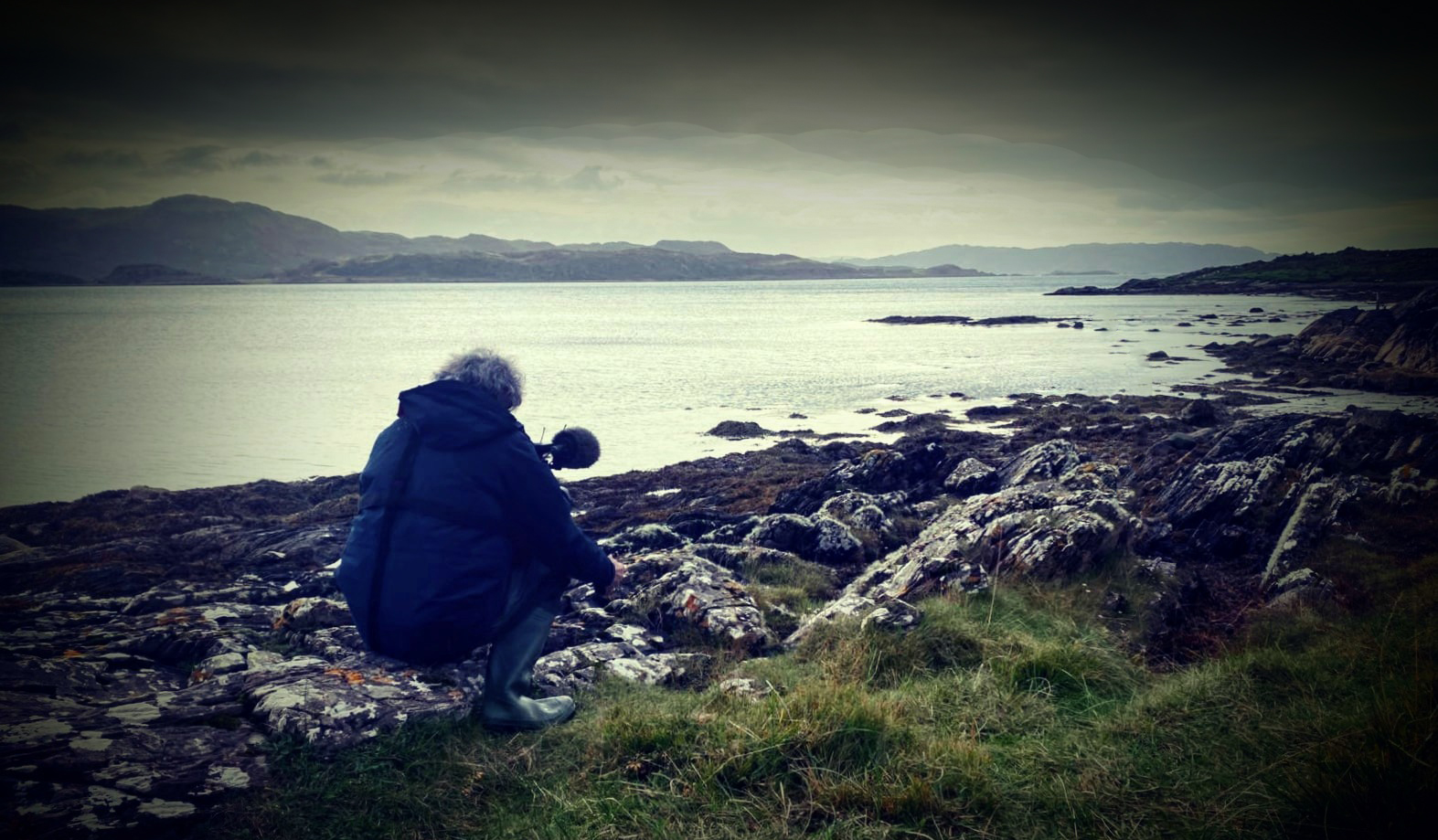 Then a slow drive to our hotel, grabbing a couple more GVs as we went.
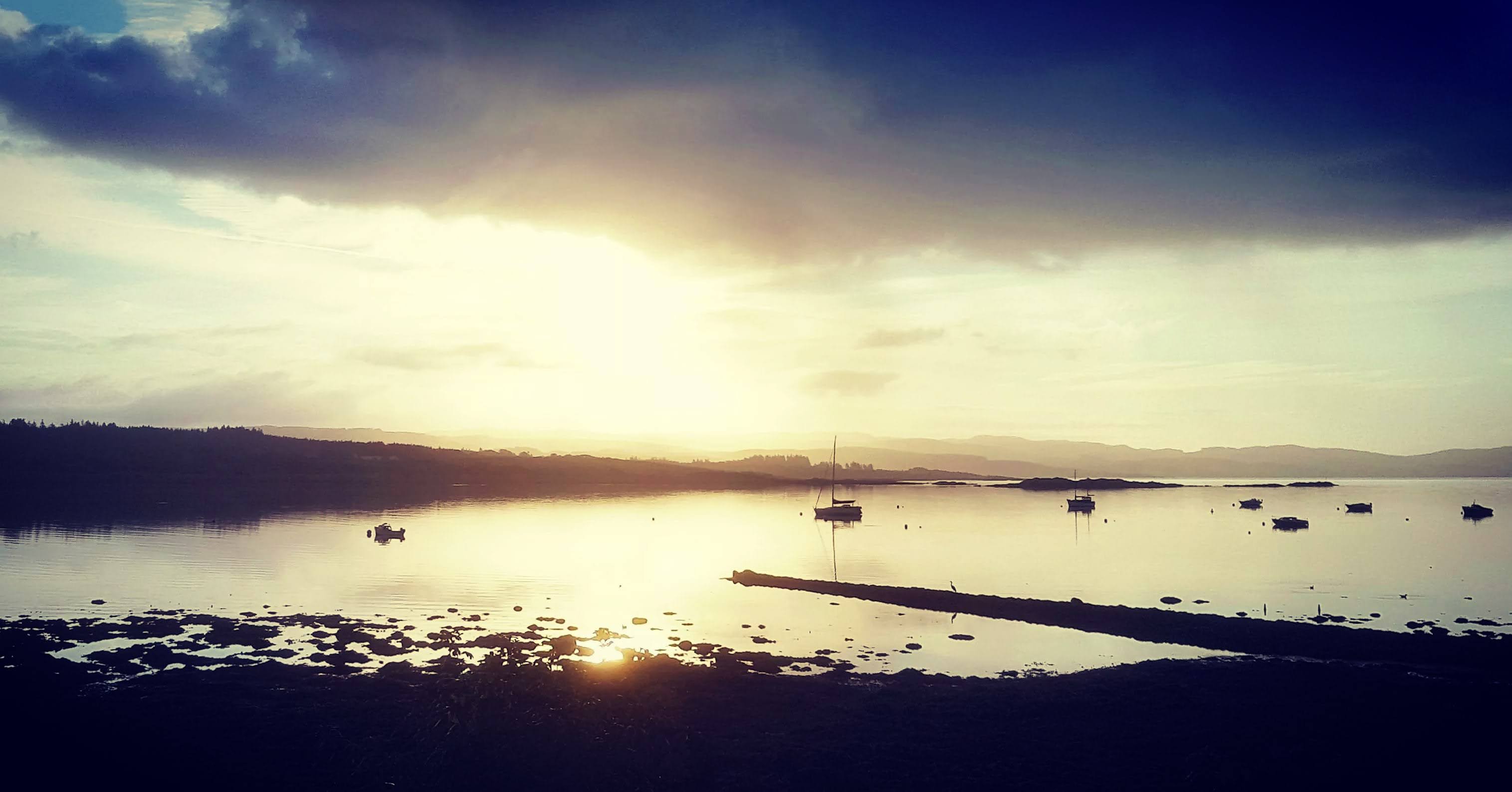
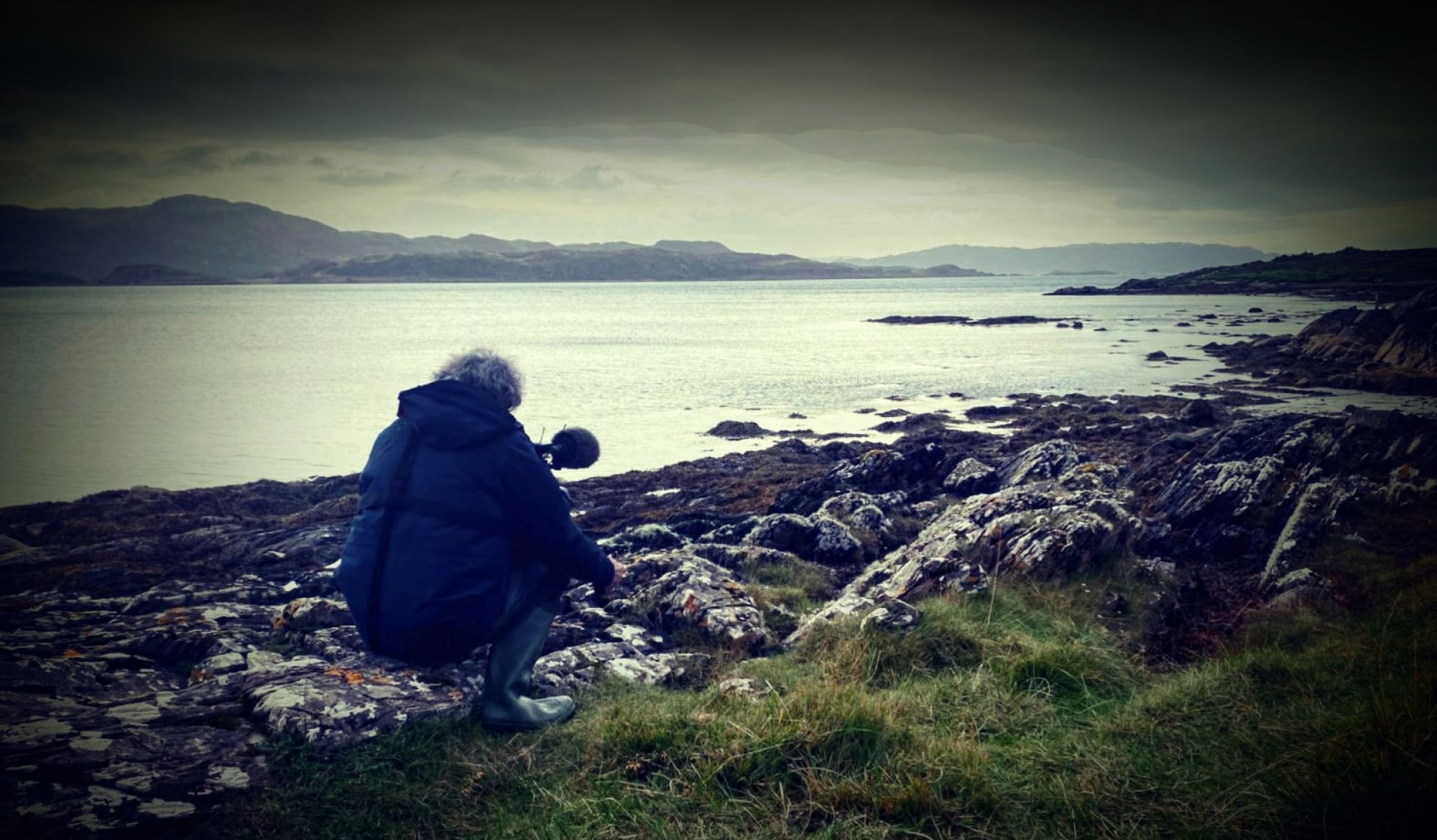
The next morning, the loch in front of our hotel was bathed in a breathtaking liquid gold light. Welcome to my office.
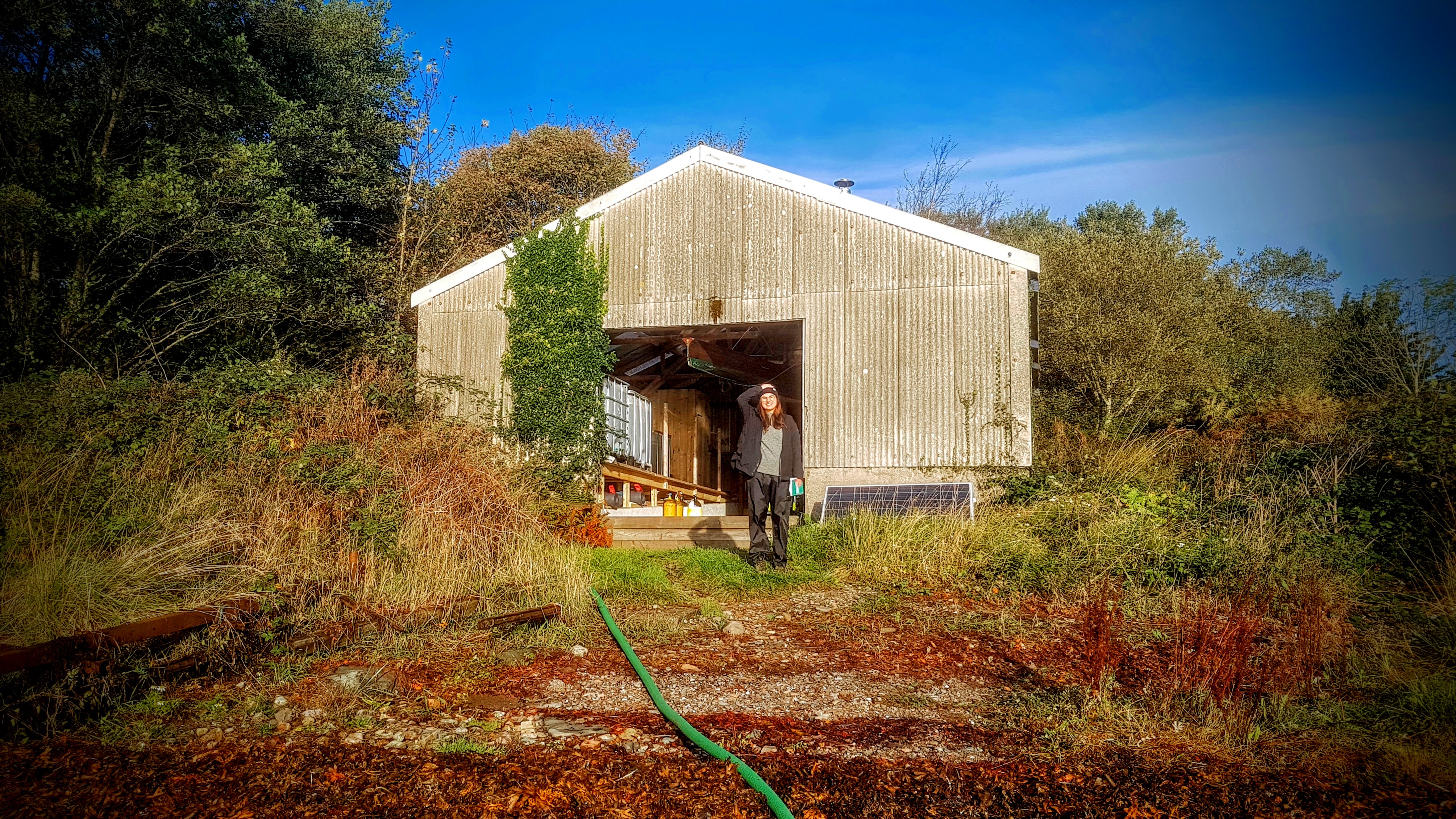
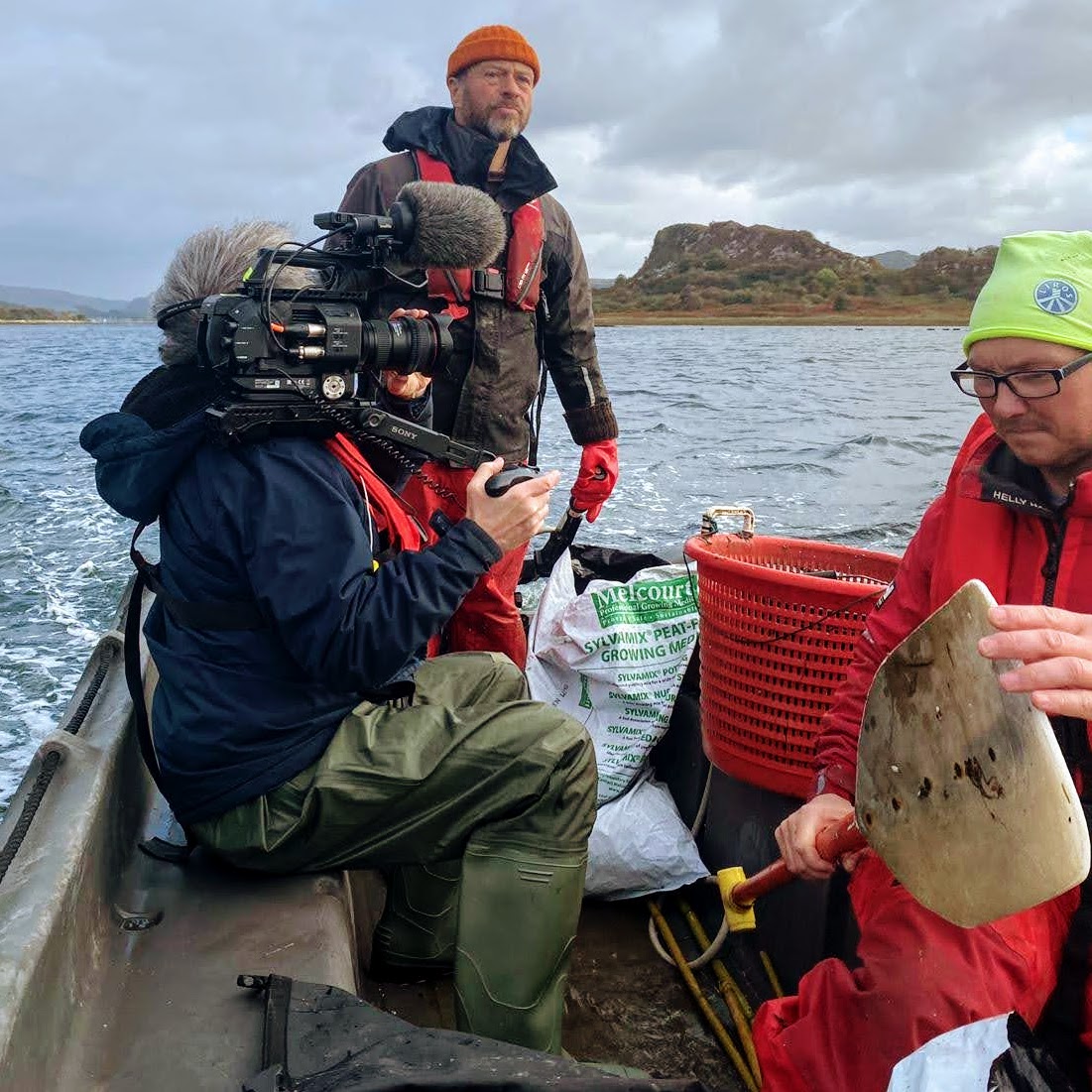
Our 2nd, day was a big day. First, we filmed the Glasgow University professor, who leads the project, working in the nursery where seagrass is being cultivated, ready for sowing in the loch. After filming an interview with him in situ we shot him and a colleague working in their boat, planting more seagrass in one of their man-made offshore meadows.
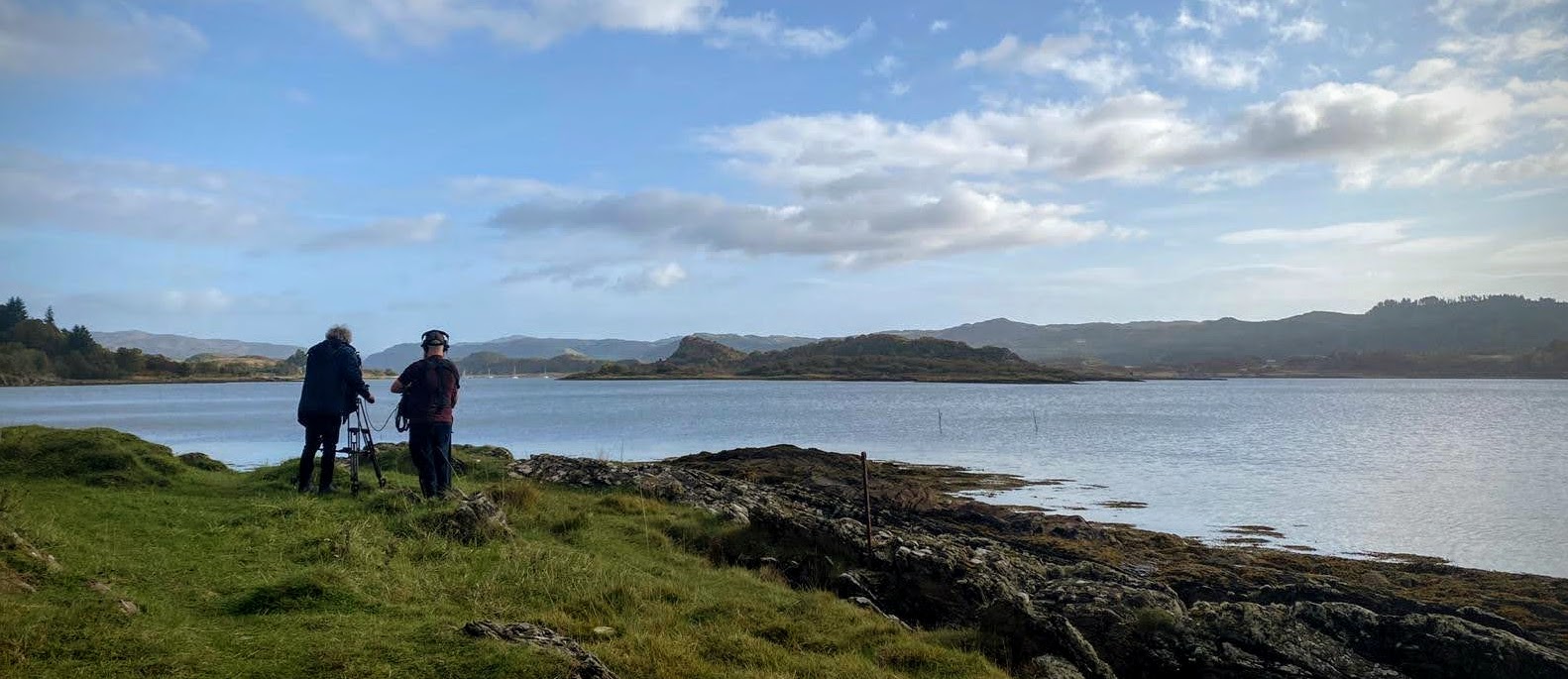 Of course, one can never have too many GVs and in such a stunning place there is no shortage of beautiful subjects and the pleasure of filming such beauty is addictive.
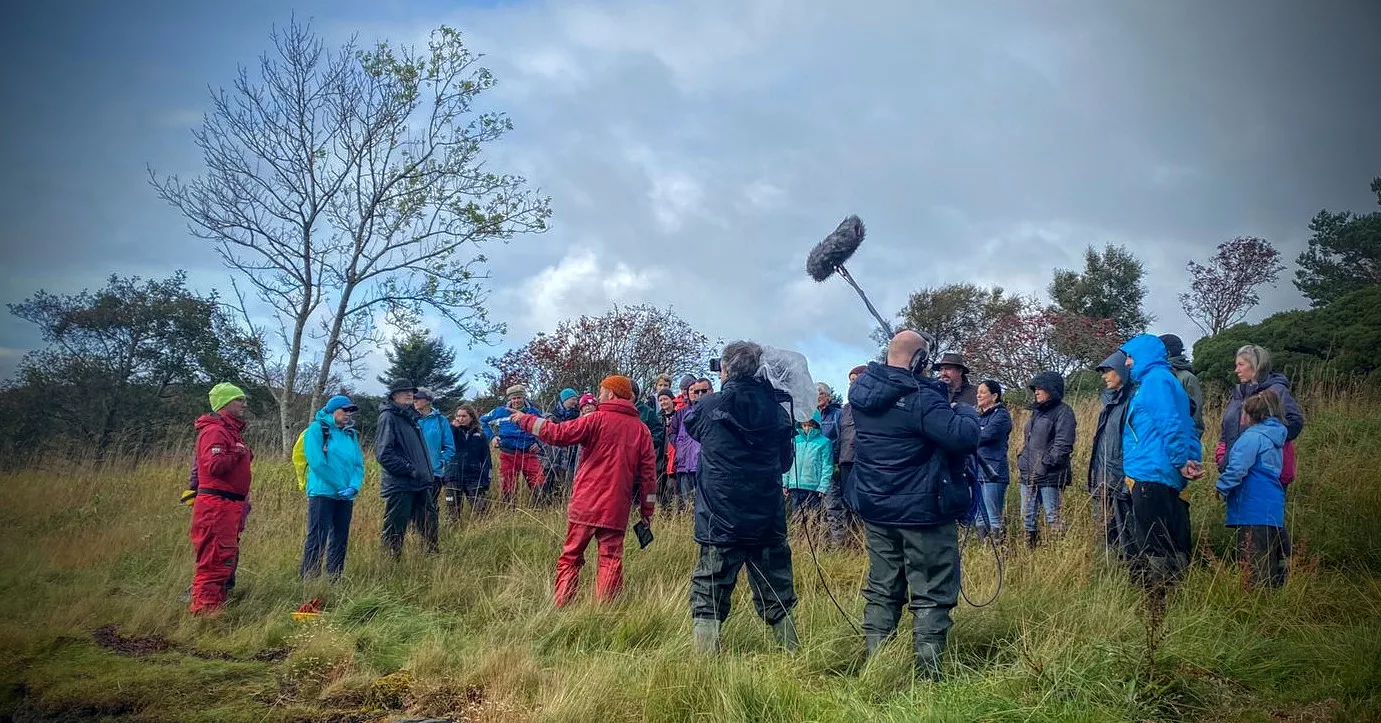
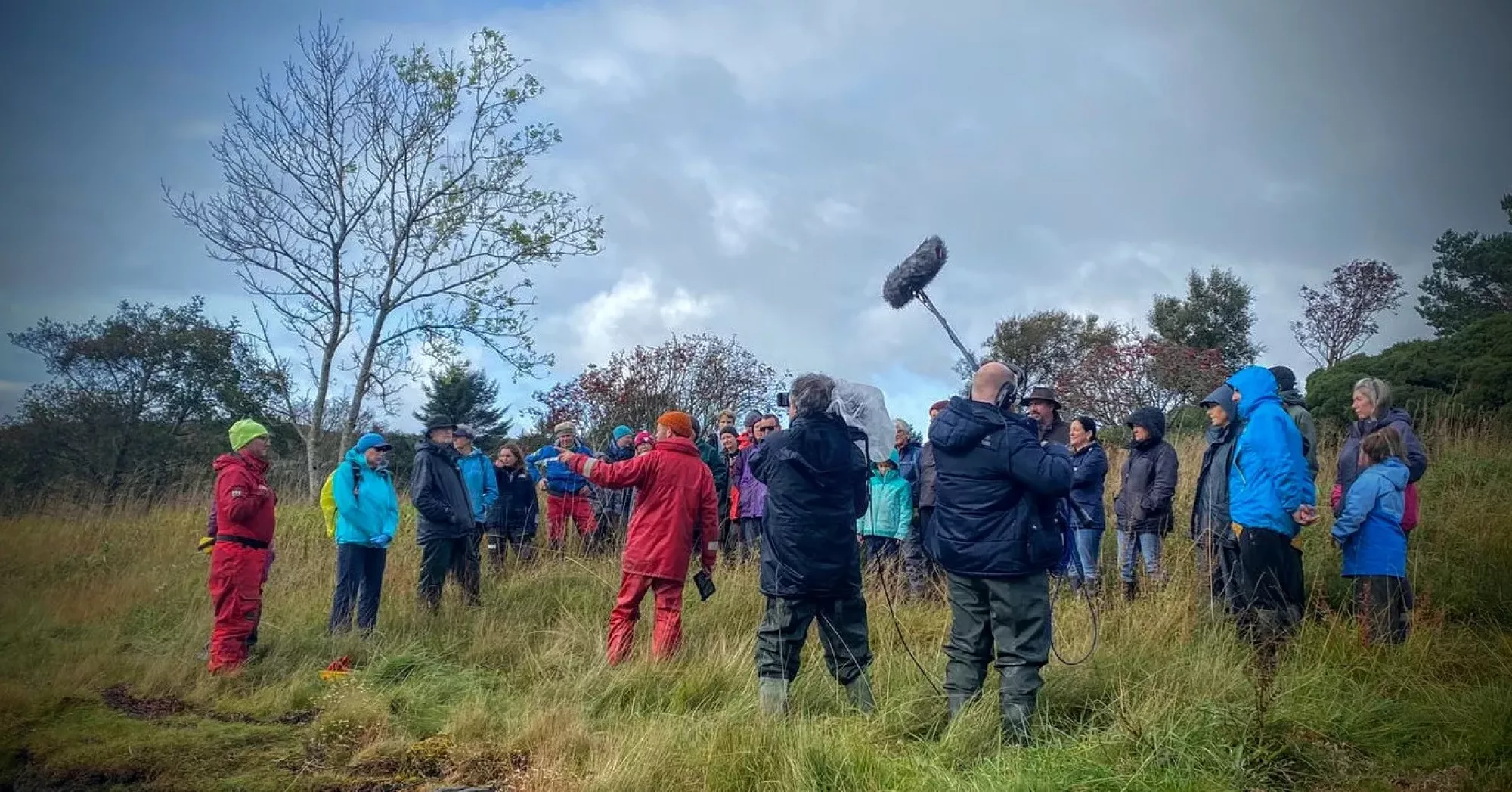
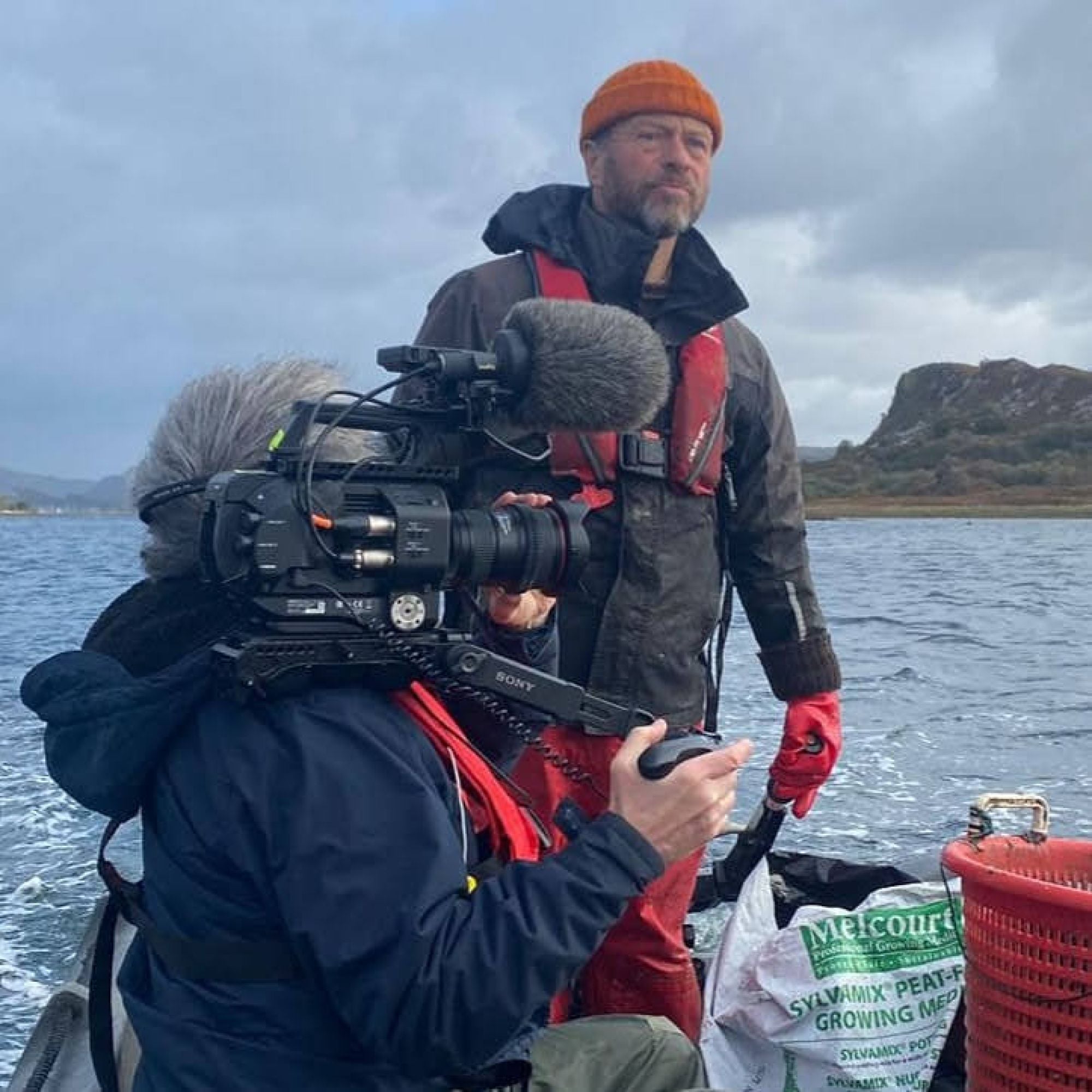
After lunch, we film a community activity. The rain made being outdoors quite uncomfortable yet a group of people had gathered by the loch shore, to broadcast seagrass seedlings into the water. Everyone was wearing waterproof outdoor clothing, so, it seemed like a good idea to wrap my camera in its newly acquired raincoat.
The Professor, briefed the gathered community before the operation commenced. The people were to stand at the edge of the water and cast seedlings as far as they could, into the water.
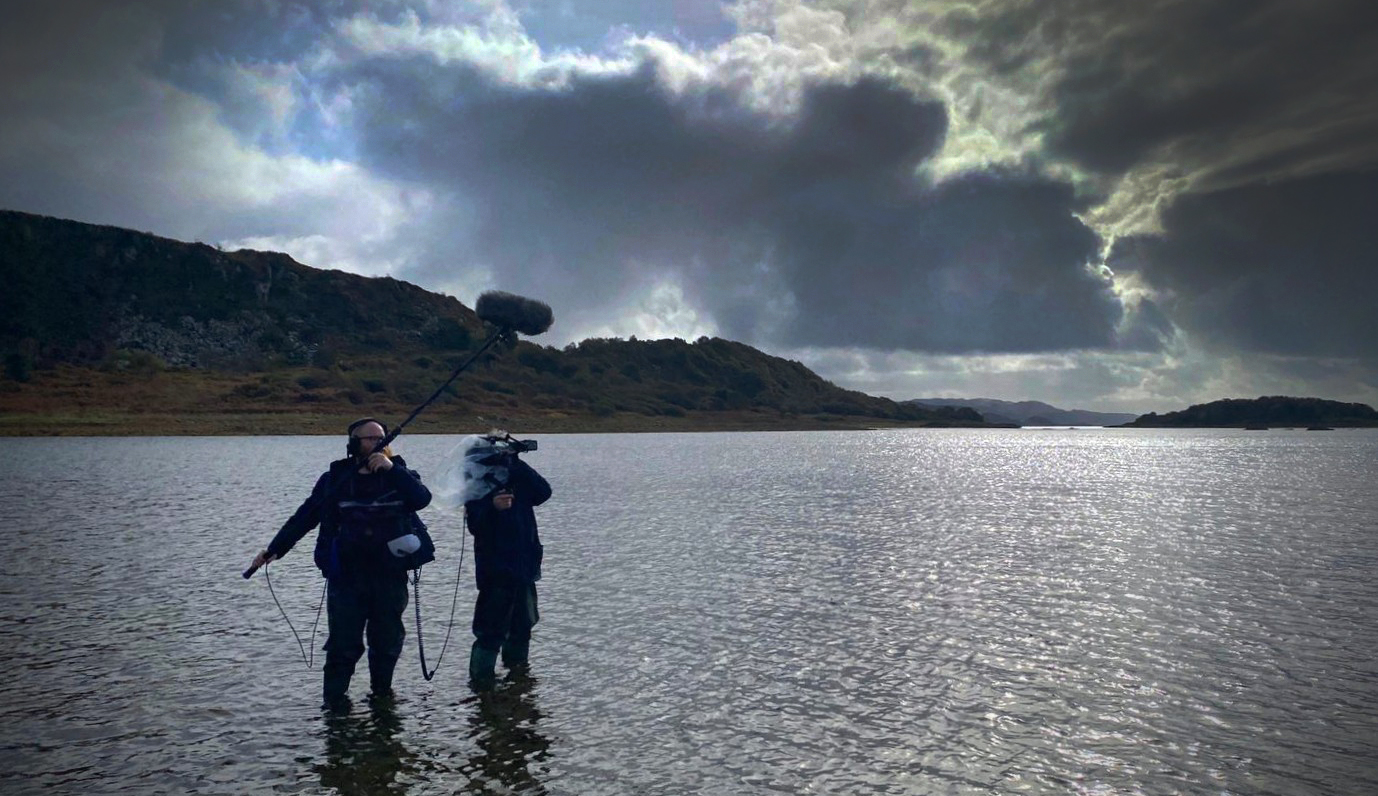 I figured it would be great to get some shots from the water, so I could show the faces of the people enjoying the work and get a sense of the seedlings starting their adventures, and hopefully, I would capture some closeups of seedlings splashing into the water, with the crowd beyond.
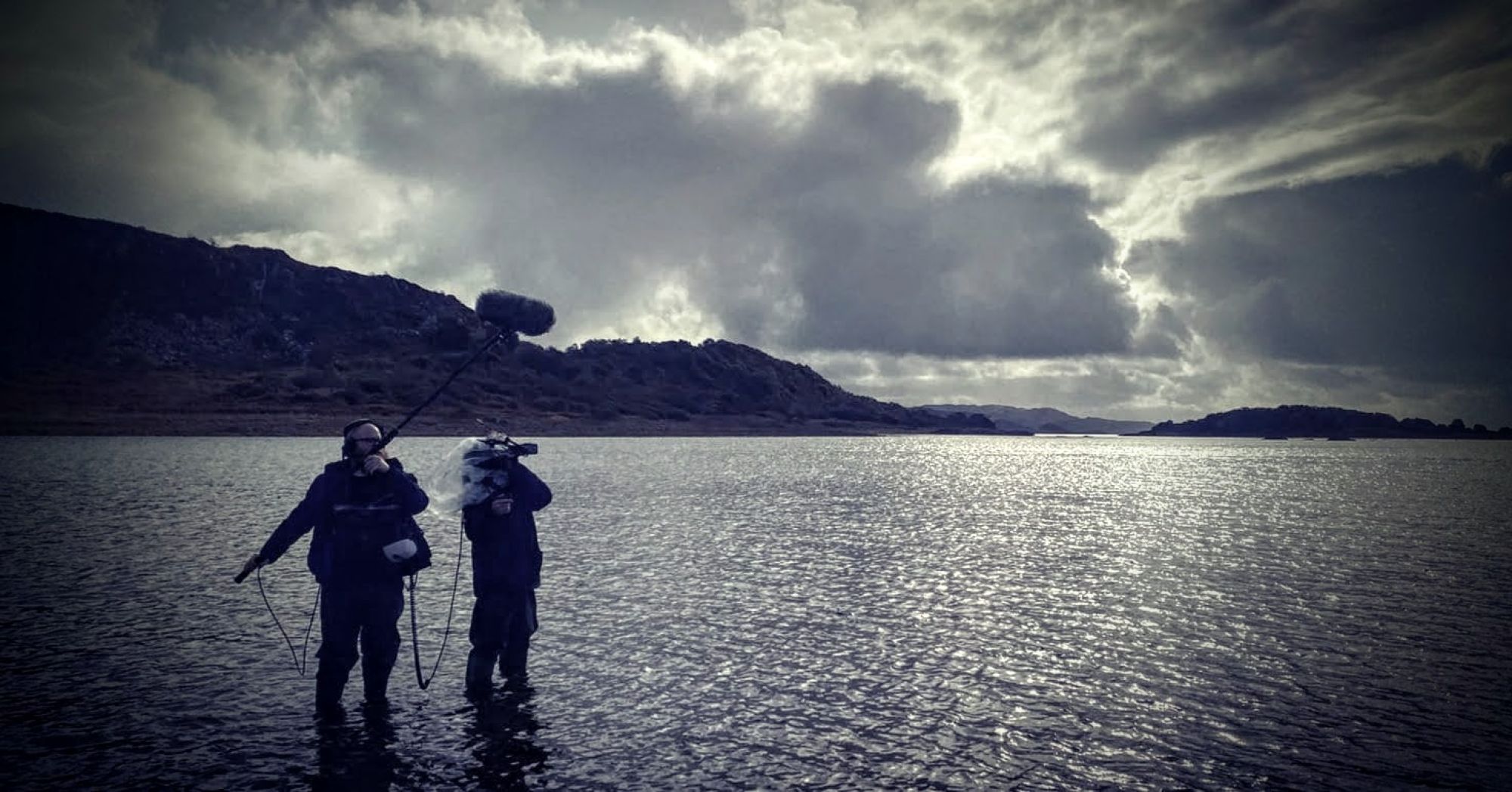
So, wearing waders, supplied expressly for the purpose, I very carefully and slowly started to walk into the water. Looking straight down to ensure I avoided any trip hazards. We progressed maybe 5 or 6 yards. The water was clear and shallow, no more than 6" or 8" deep. Matthew dutifully followed close behind me. I filmed some amazing shots, wides, and tights, looking at the crowd from an angle of maybe 25 or 30 degrees.
Then, as always, we needed more angles, so we continued our paddle, out a little further, to position myself more in front of the middle of the assembled community.
That was when things became just a little sticky. My feet were sinking in and I could not take another step. The more I tried to lift one foot, the deeper the other was sucked down. I twisted around to check on Matthew. He was experiencing the same problem. We tried to steady each other and to free ourselves from the quicksand. I managed to free one foot and tried to take a step towards the shore before losing my balance. Matthew and I crashed down into the water. Luckily for me, my camera is light, was on my shoulder, and was wearing its new raincoat. As I fell, I raised the camera as high as I could. Matthew was not in such a fortunate position. His hands were holding his boom pole, so he could not raise his mixer bag which was on a shoulder strap, at waist height. Needless to say, as he found himself sitting on the bottom of the loch, some water ingressed the case through the side openings intended for his cables.
Kristina and the professor ran to our rescue, and we were quickly back on dry land. My camera seemed fine, so far as I could tell. It had a minimal sprinkling of water droplets, which might have been raindrops from when I put on the raincoat, or salt water from the sea loch. But nothing to cause more than minimal concern. The bin liner had done a great job. Understandably, Matthew was somewhat exorcised about the salt water ingress and the possibility of catastrophic damage to his precious and expensive electronics. So, I sent him to a nearby house belonging to one of the crowd who had offered to help. He rinsed his mixer's internal electronics with fresh water and started to dry it out. I continued shooting wide shots, long shots, and close-ups, where the top mic would work well enough. The show must go on.
I then had to find Matthew, and once he was ready we went to a house further along the coast, to film another interview. It was good to be inside, warm and dry, and to enjoy a cup of hot tea while I set up my camera and lights. Matthew put his mixer in a warm place to continue drying out, and wired his mics directly into my camera.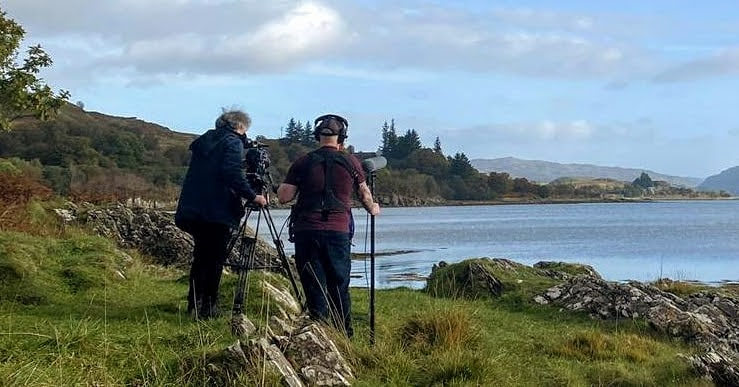
Did I mention, that a cameraman can never shoot enough B-roll, ie an editor can never have enough B-roll?
And that's a wrap!
Post-production Notes
Of course, during the long drive home and for some weeks thereafter our minds were on saltwater corrosion more than seagrass and oysters. Still, it had been an amazing couple of days in a fabulous place among such a lovely group of warm, friendly, and generous people.
Without being asked, ARD confirmed that their insurance would cover any equipment repairs or replacements required, which was reassuring to know.
Fortunately, my camera, lens, and Matthew's mixer, were all undamaged and are still working perfectly today.